IPVT of the 3-regular tree
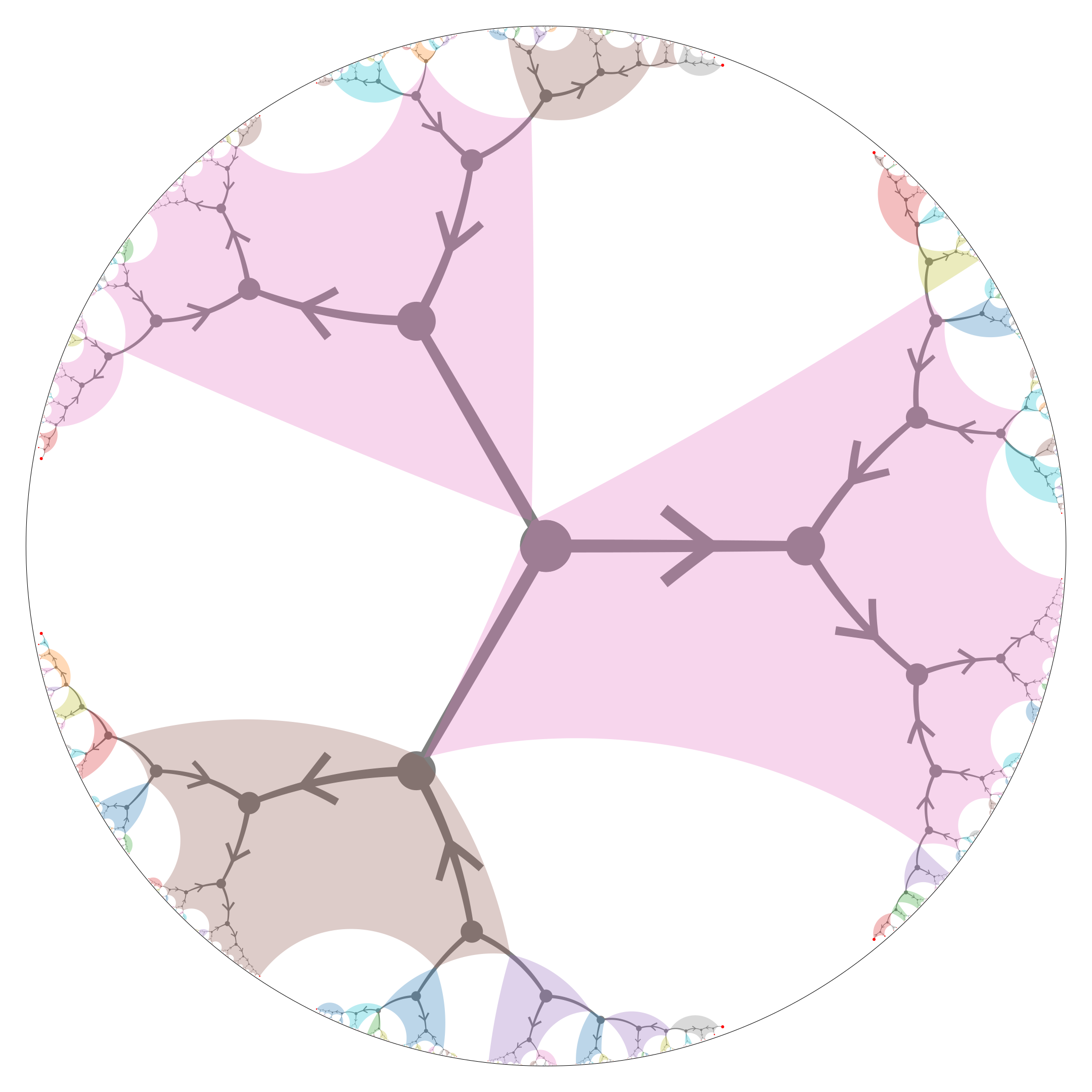
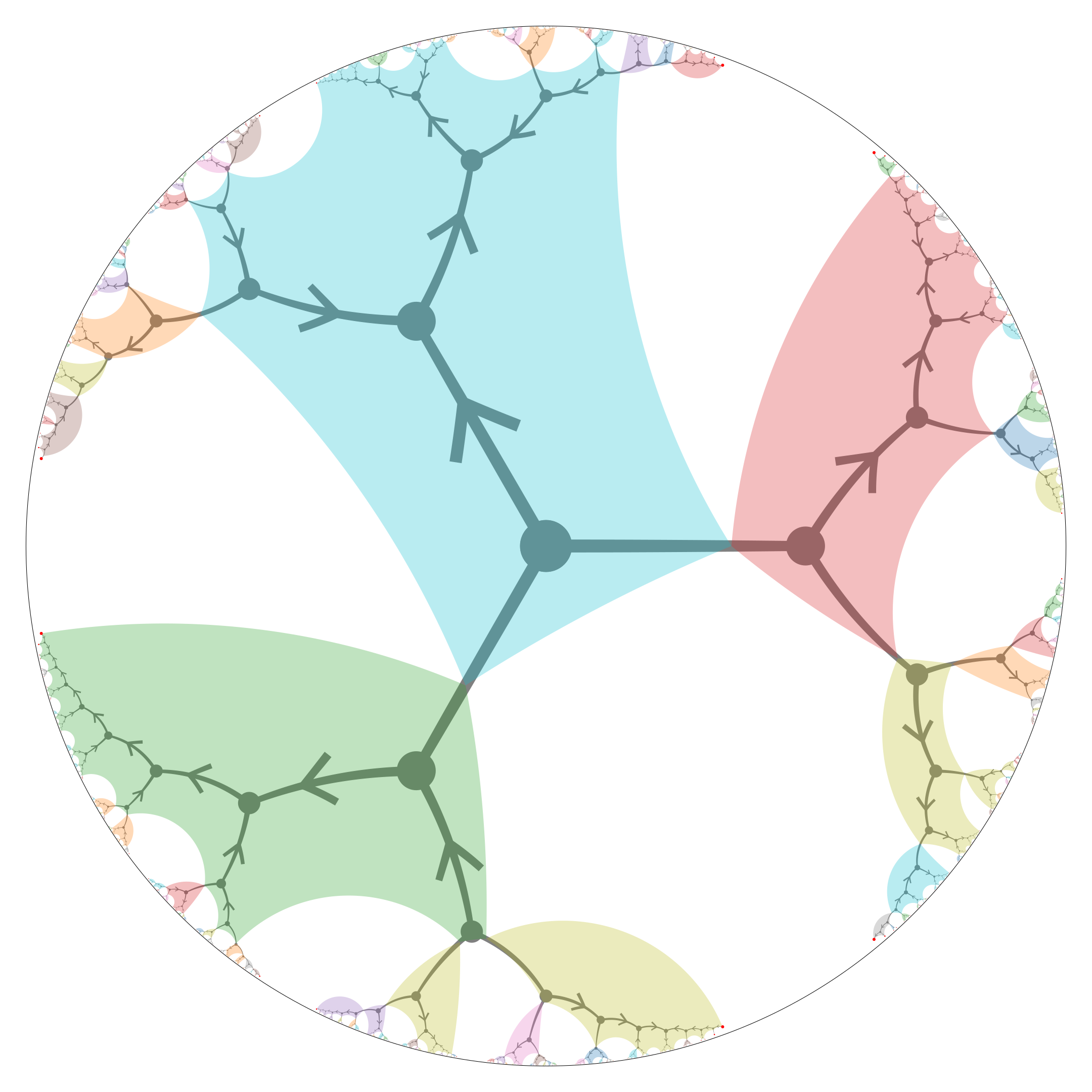
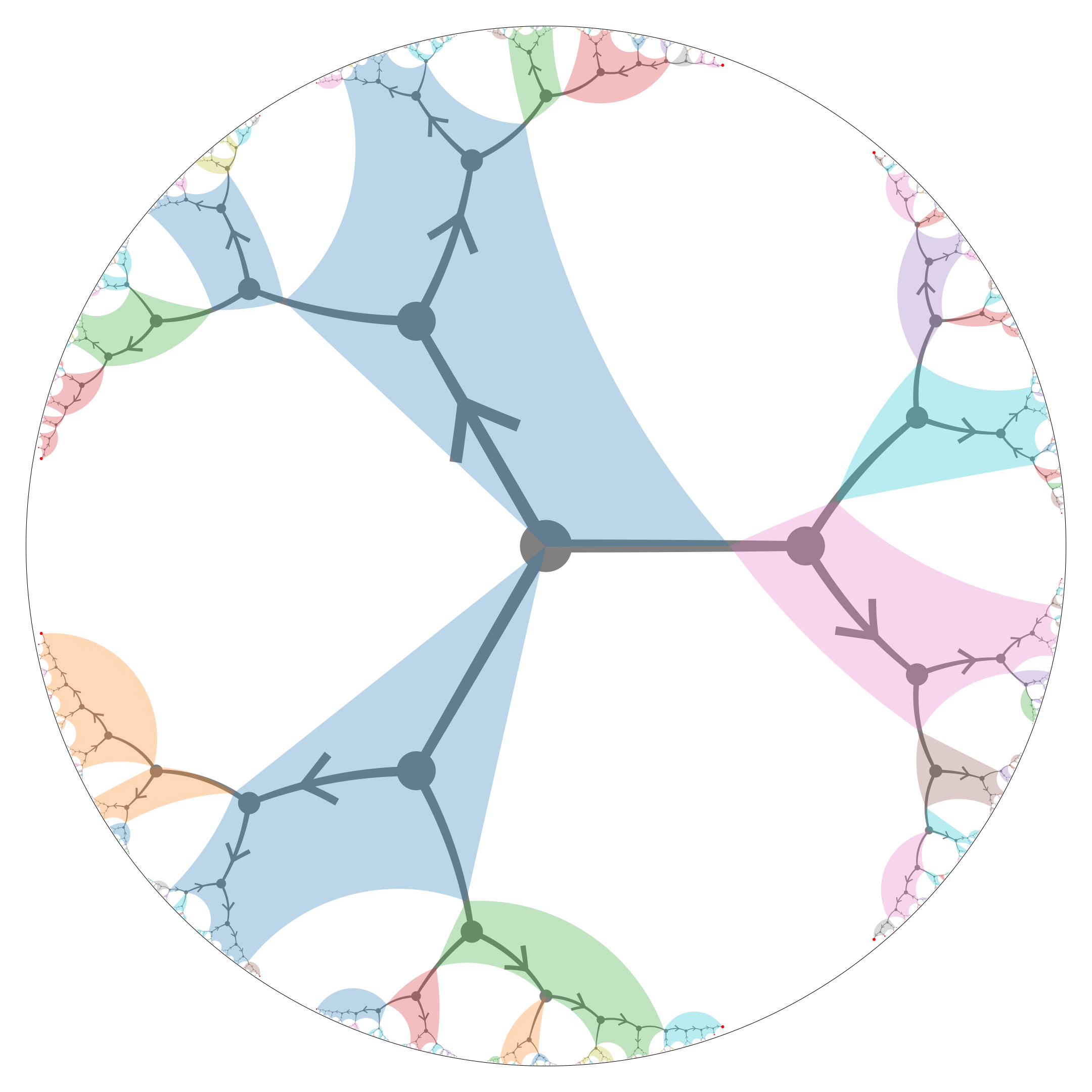
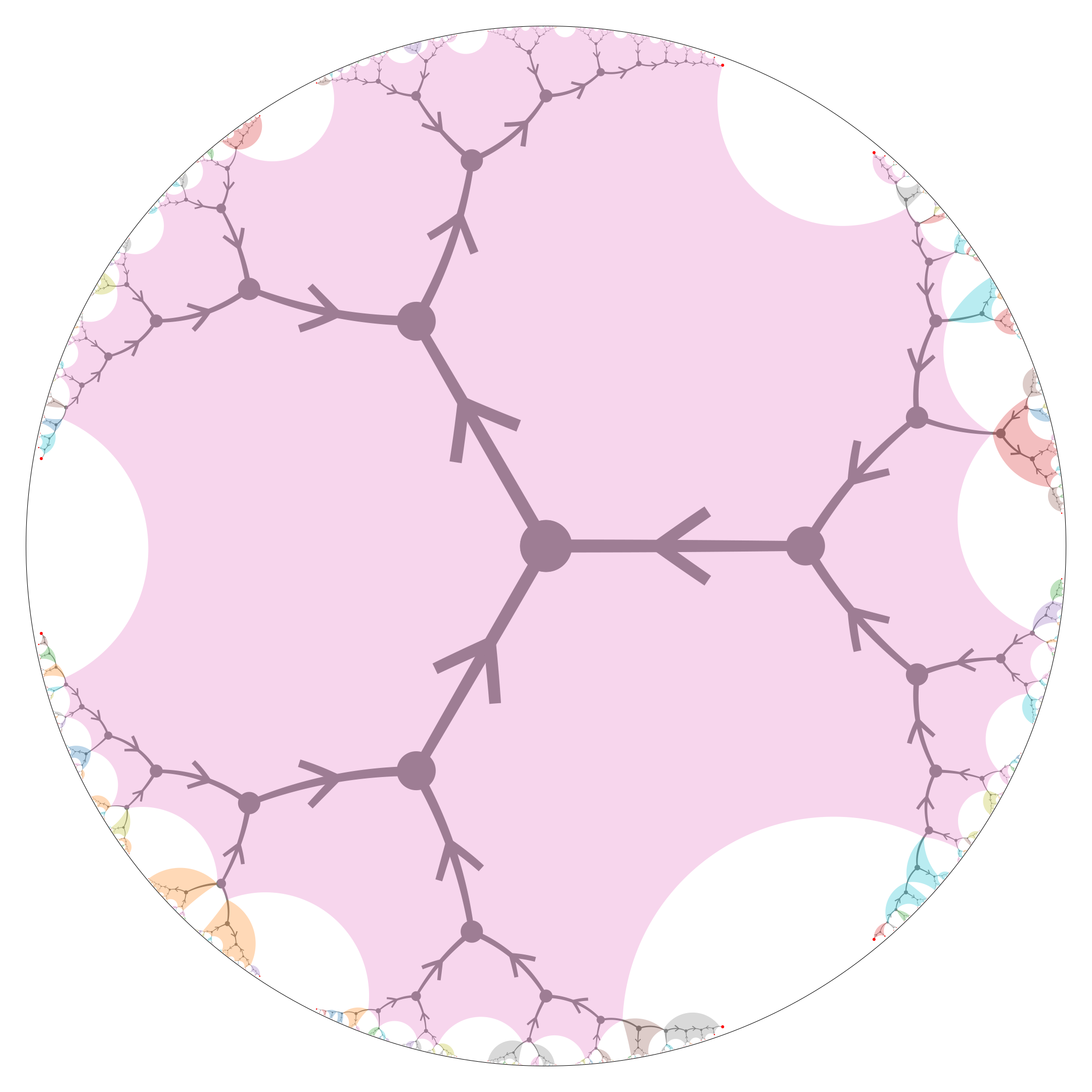
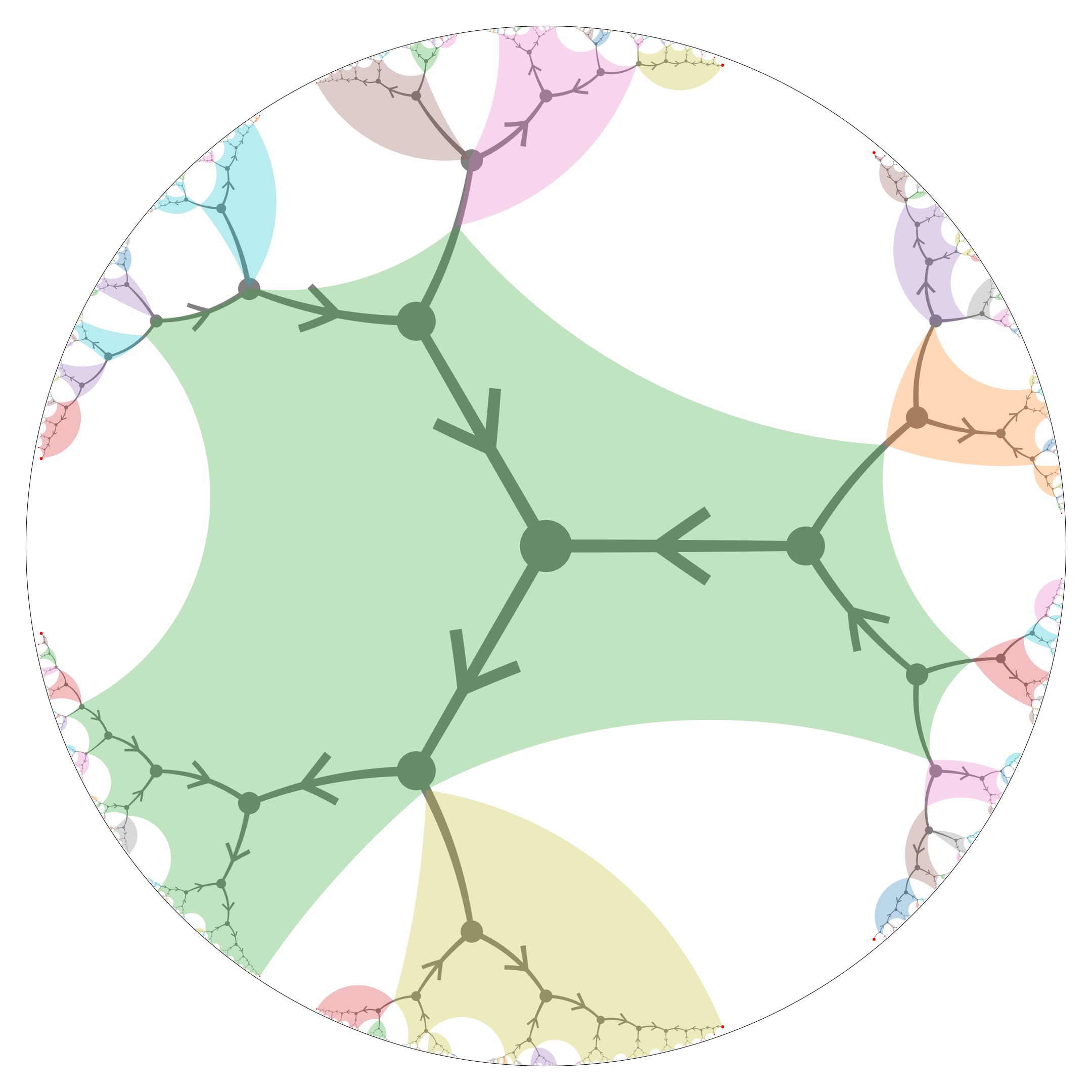
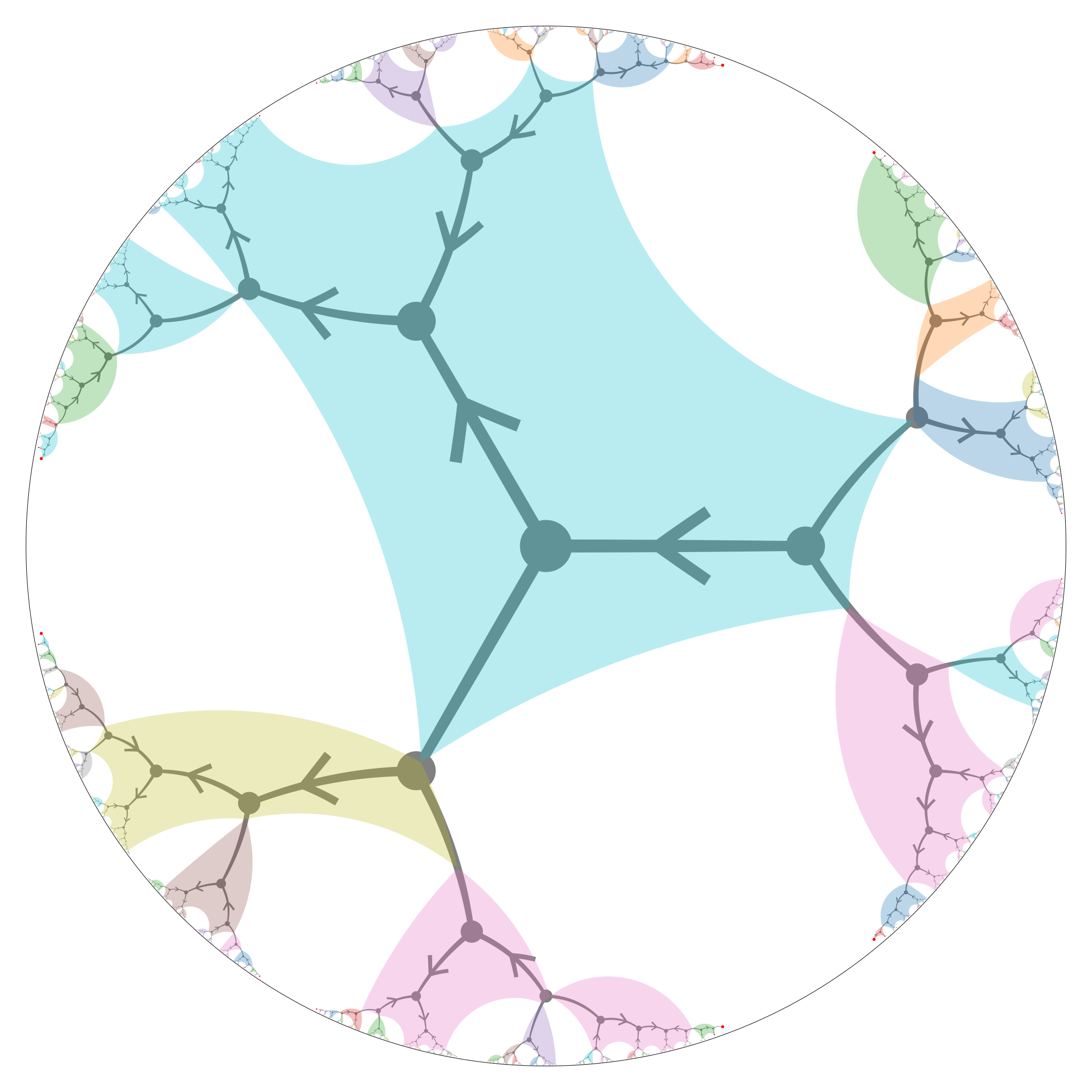
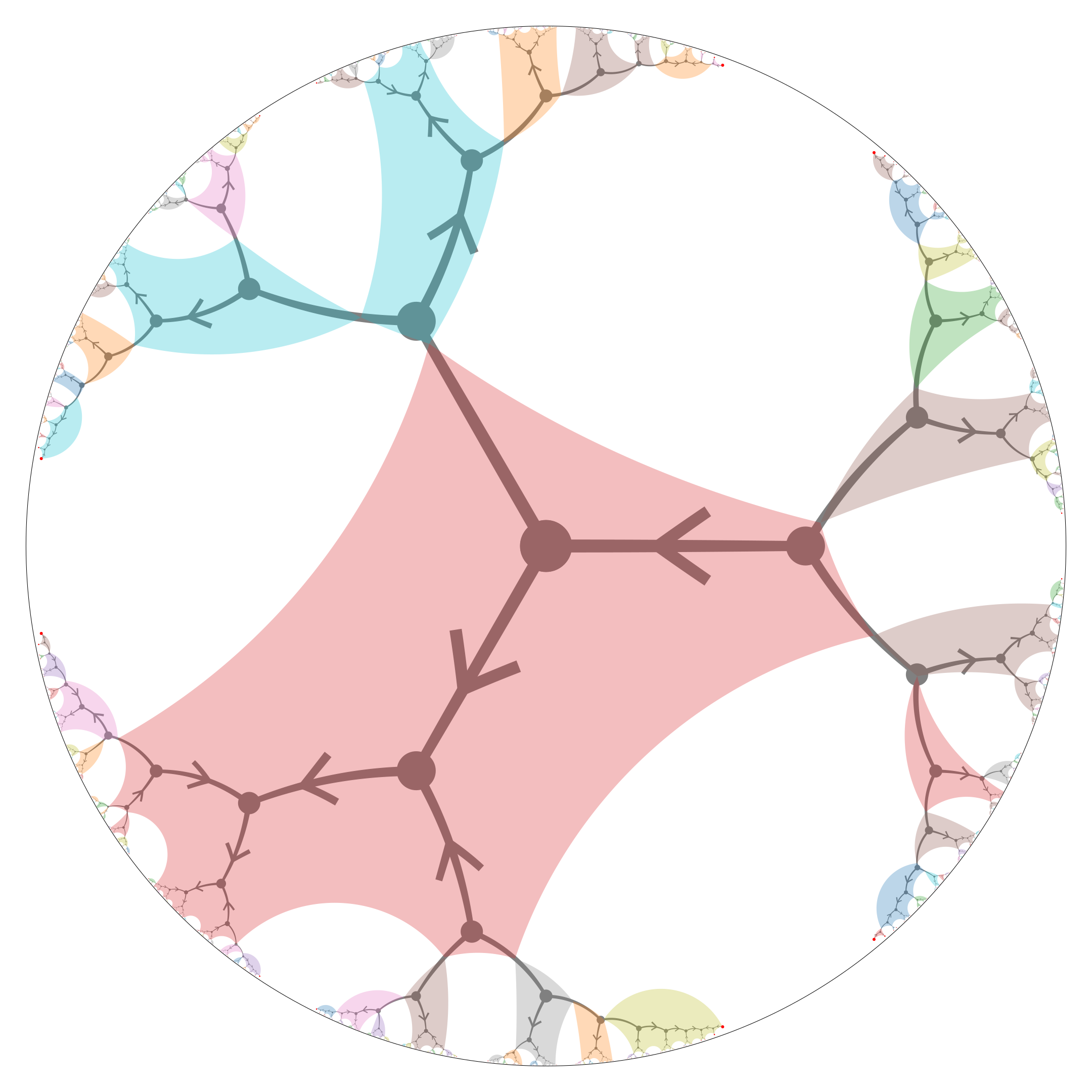
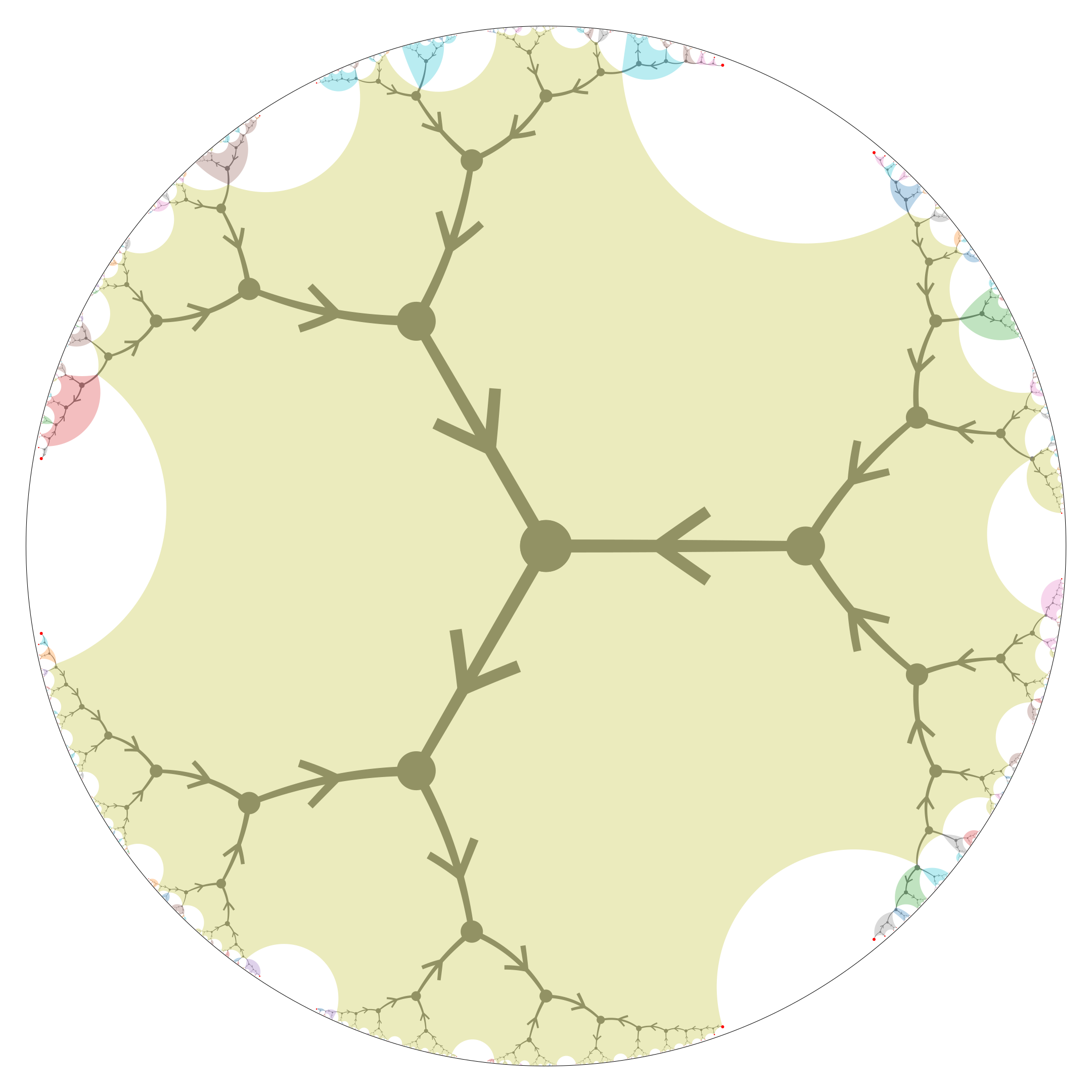
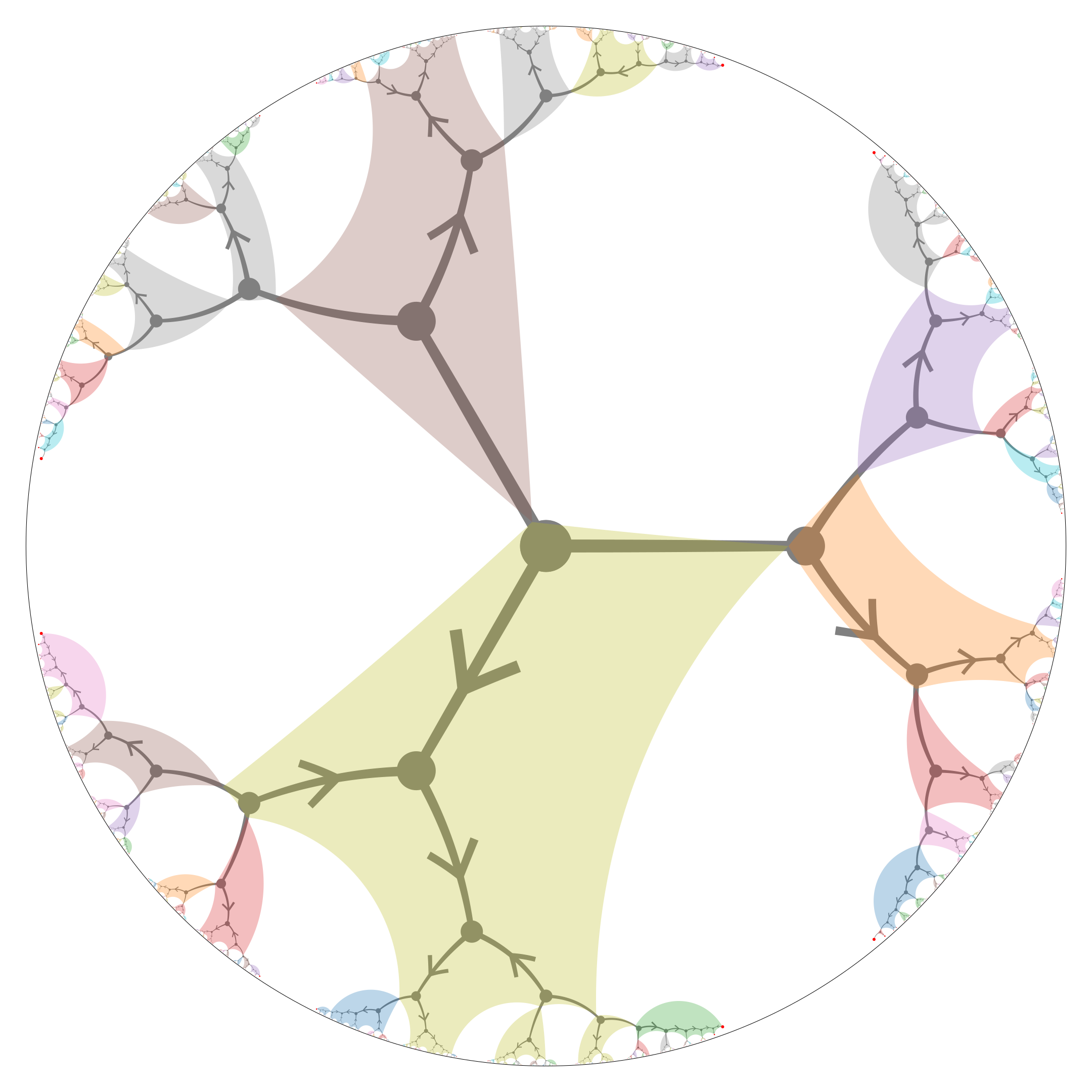
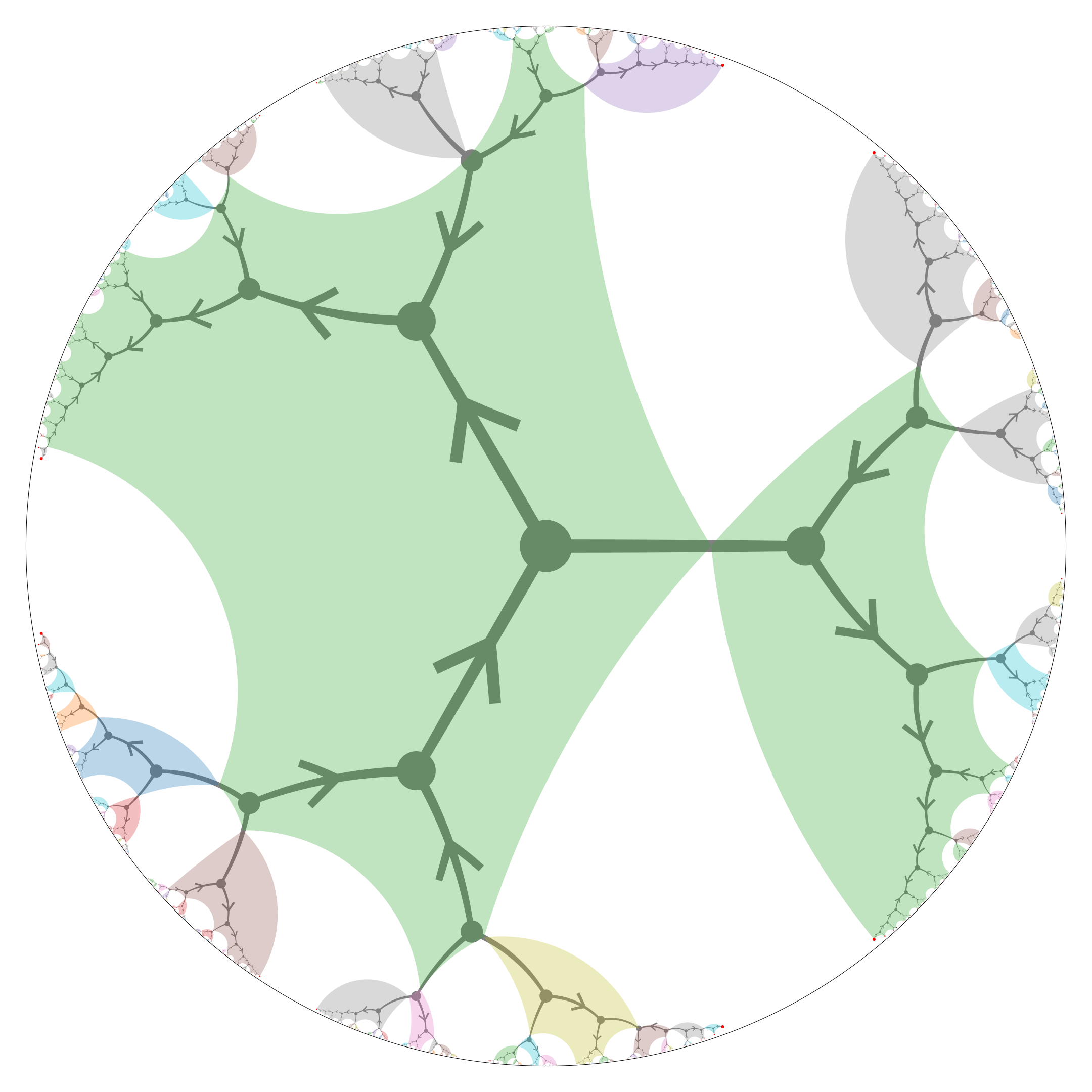
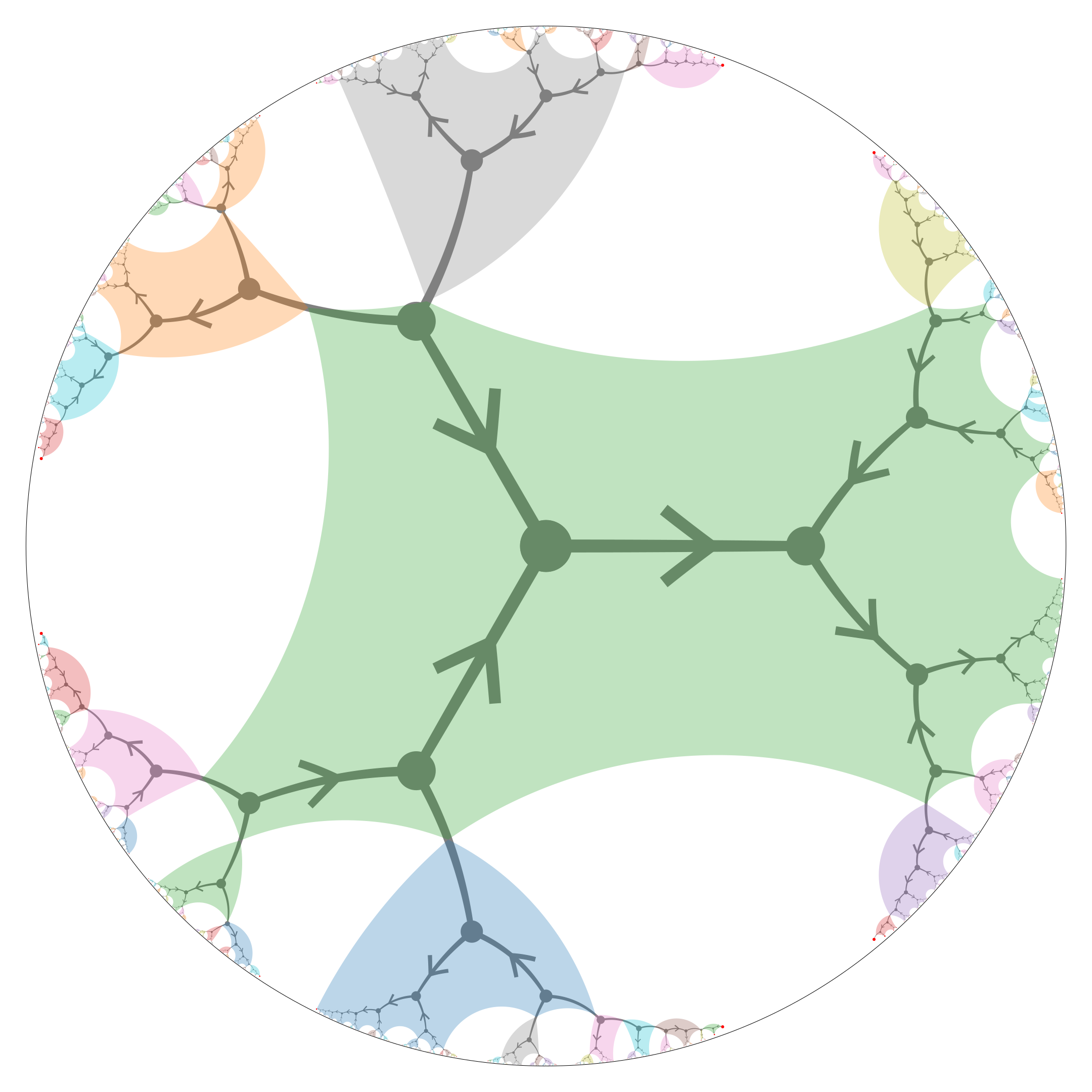
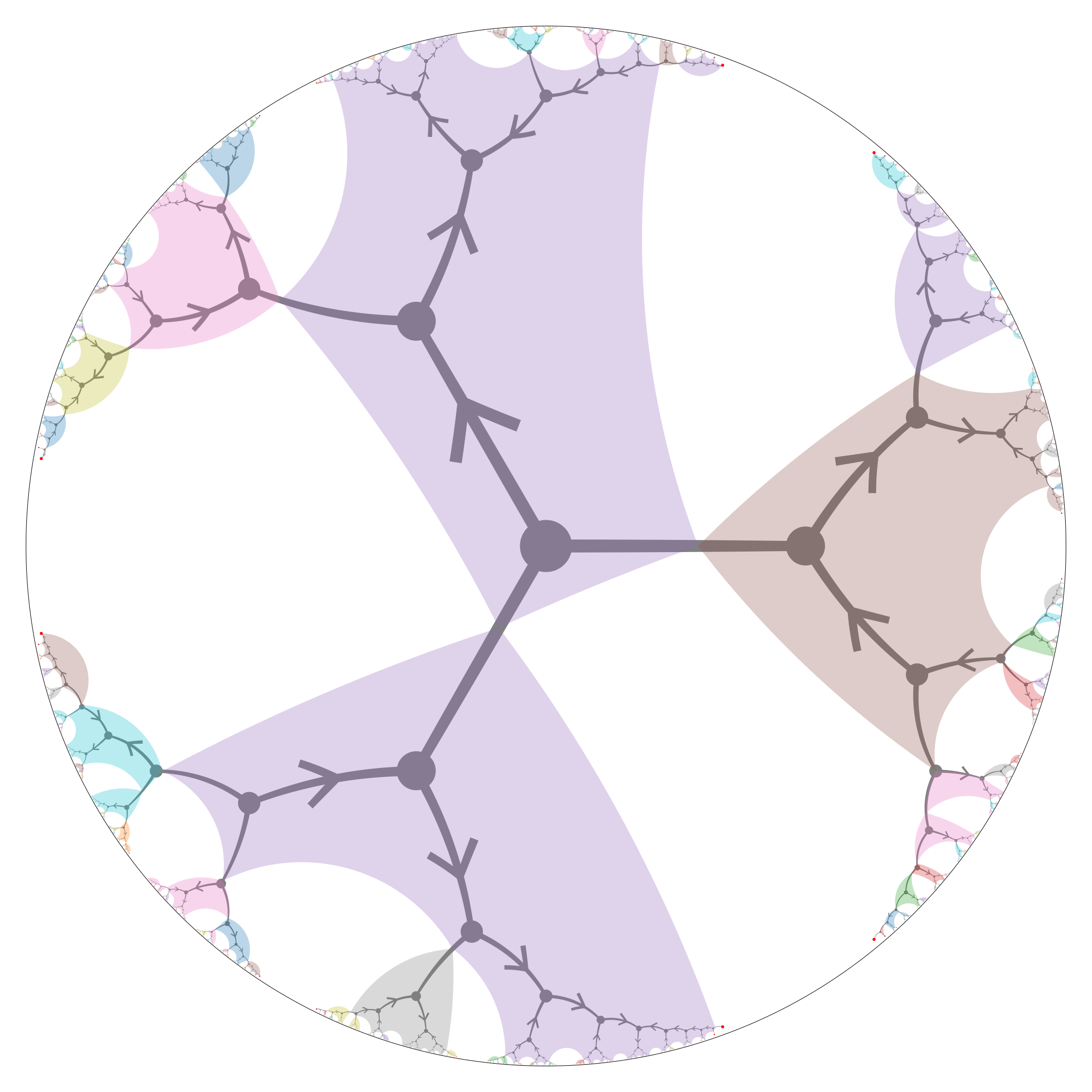
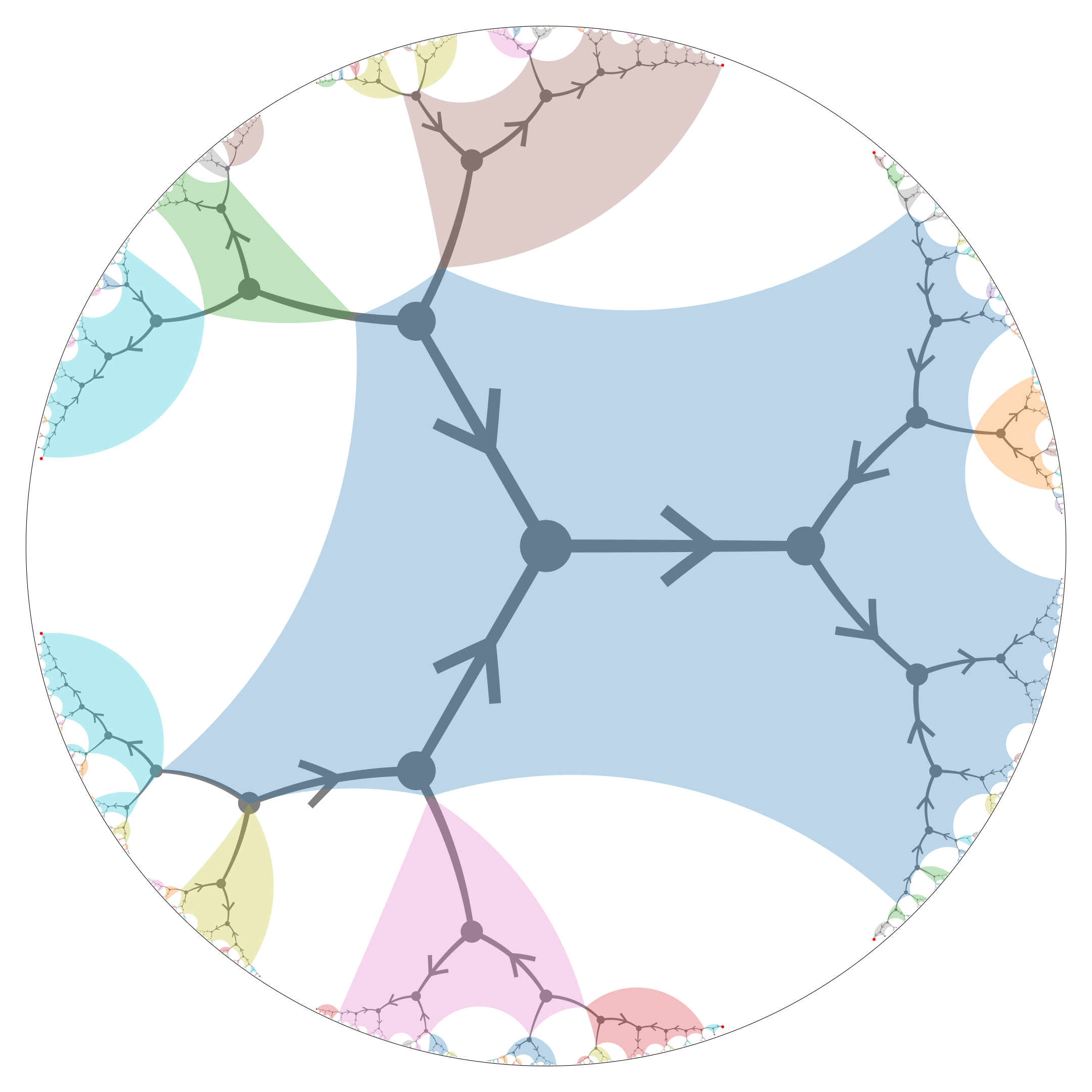
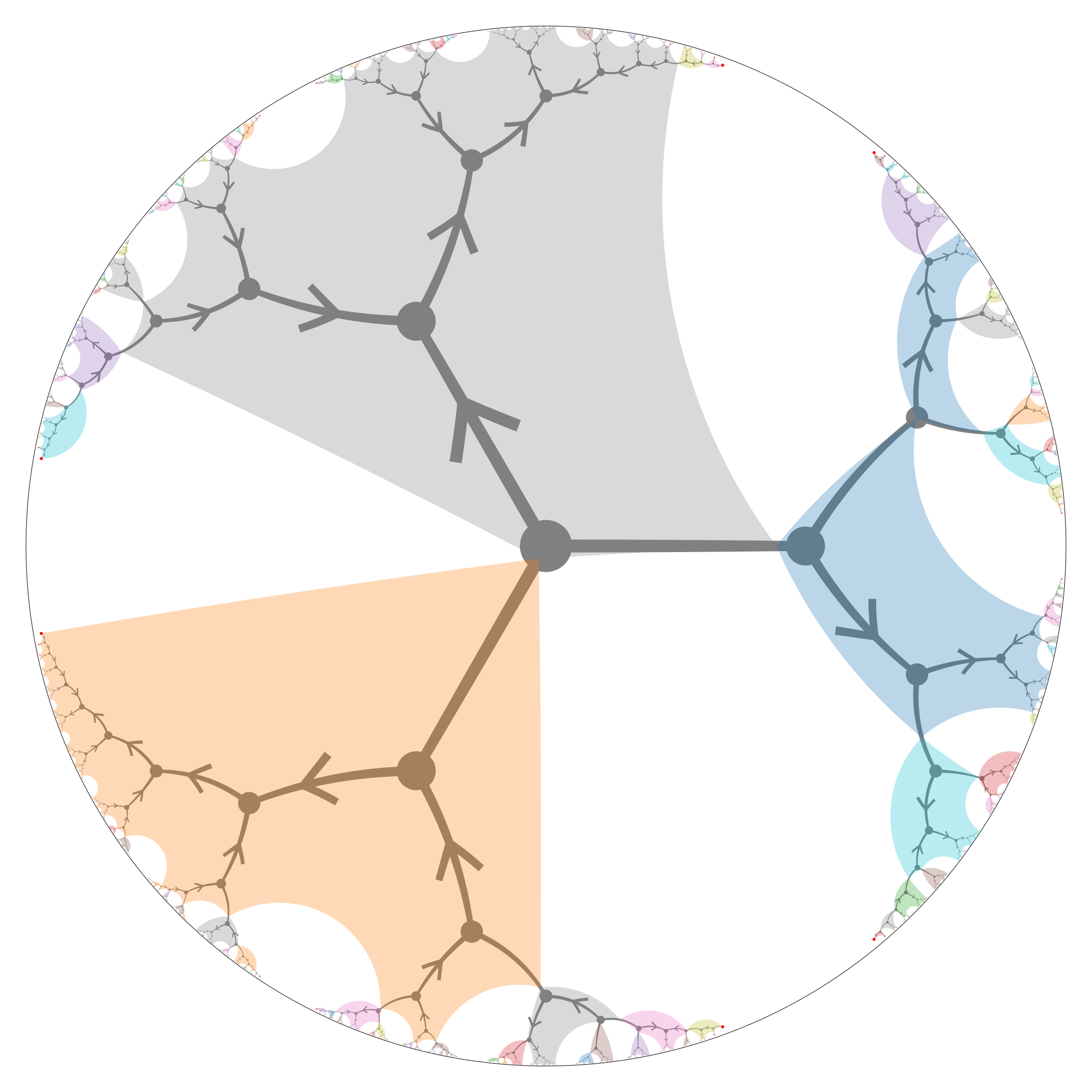
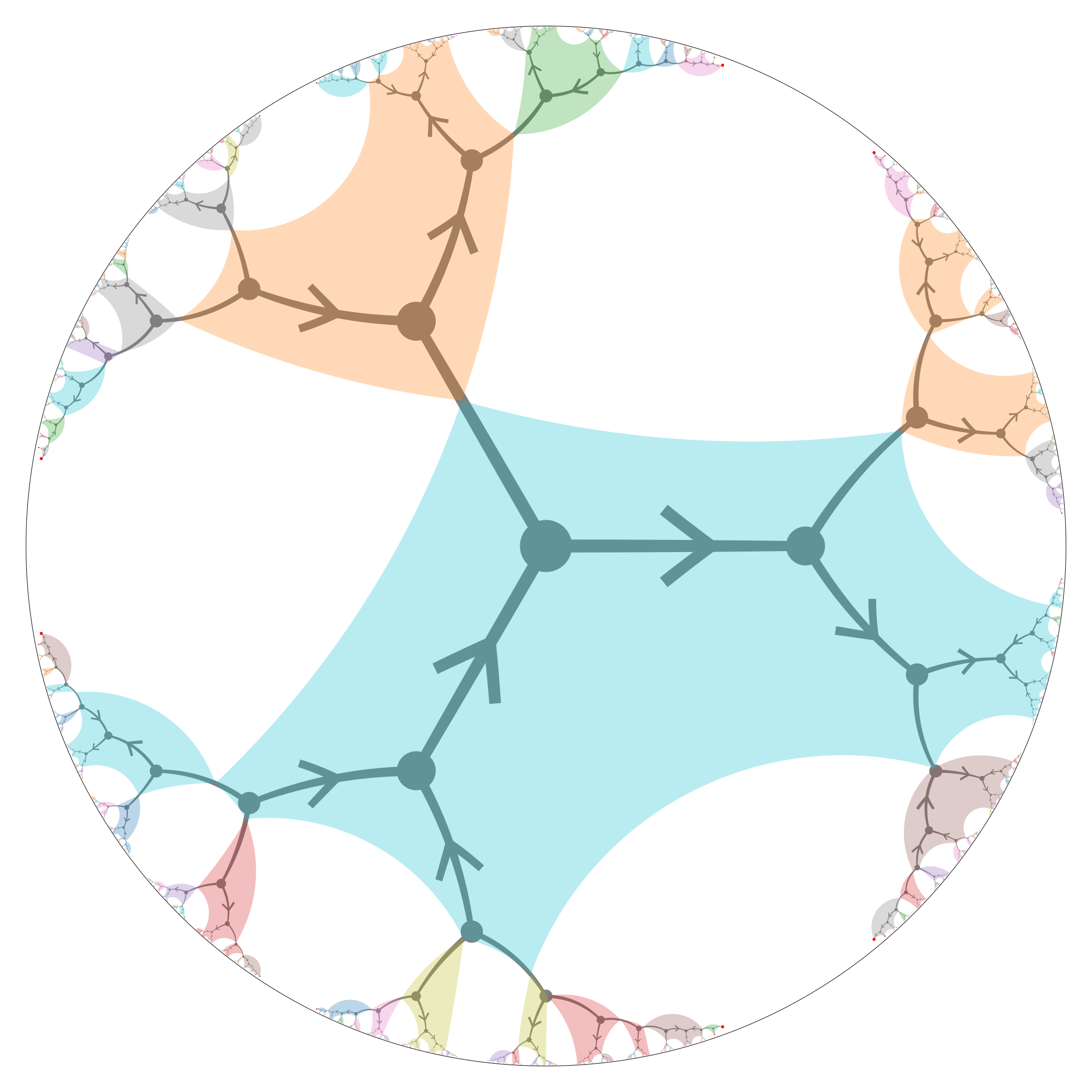
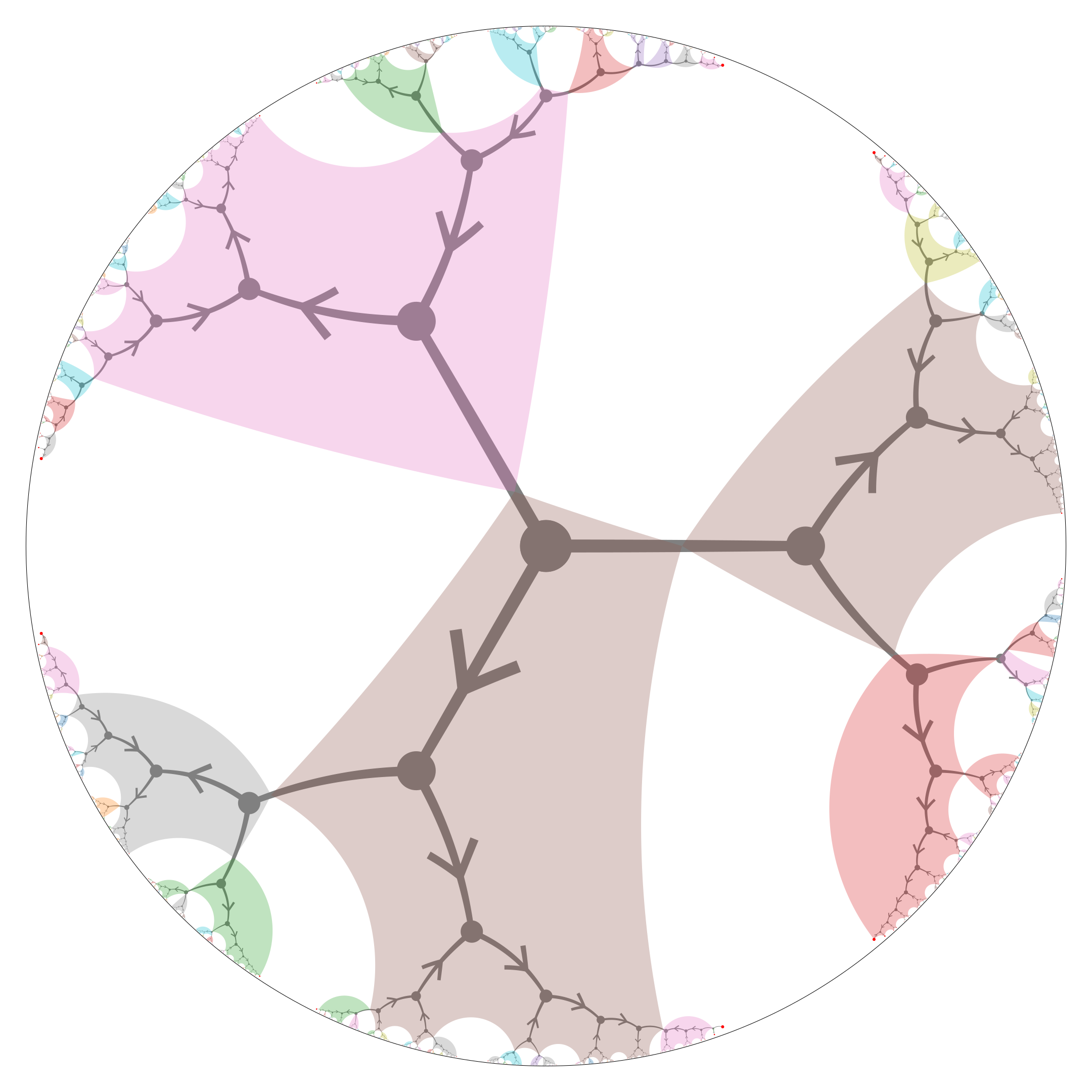
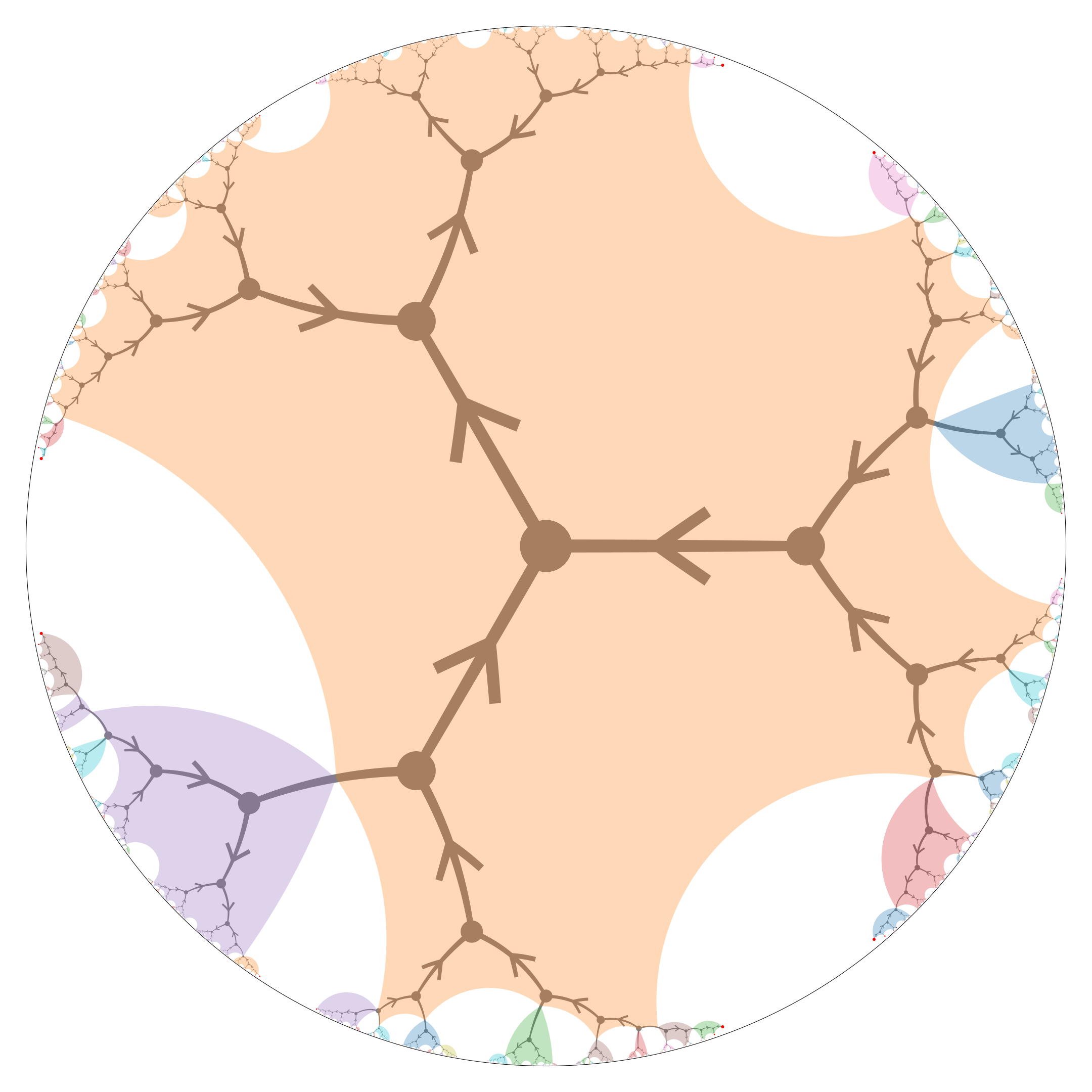
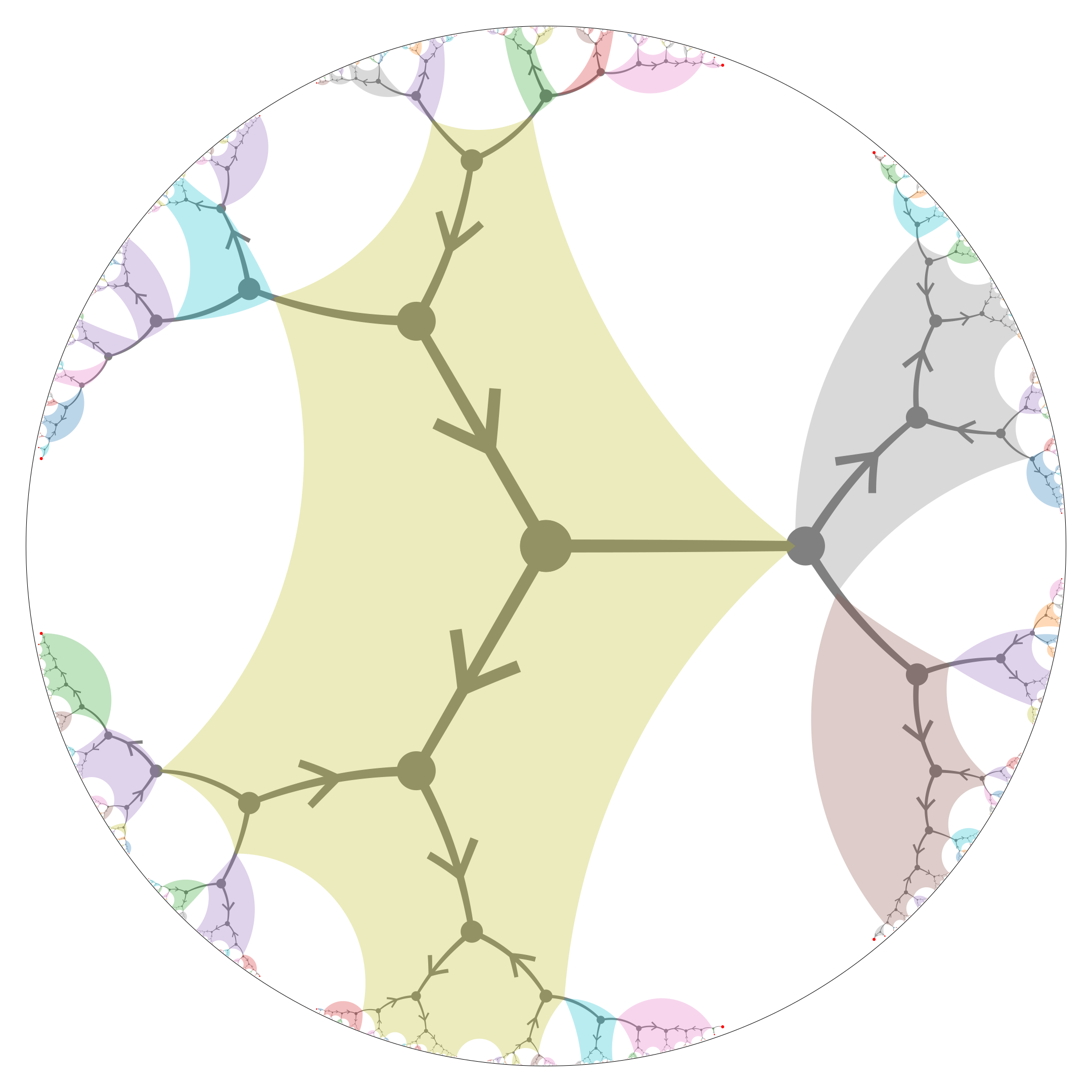
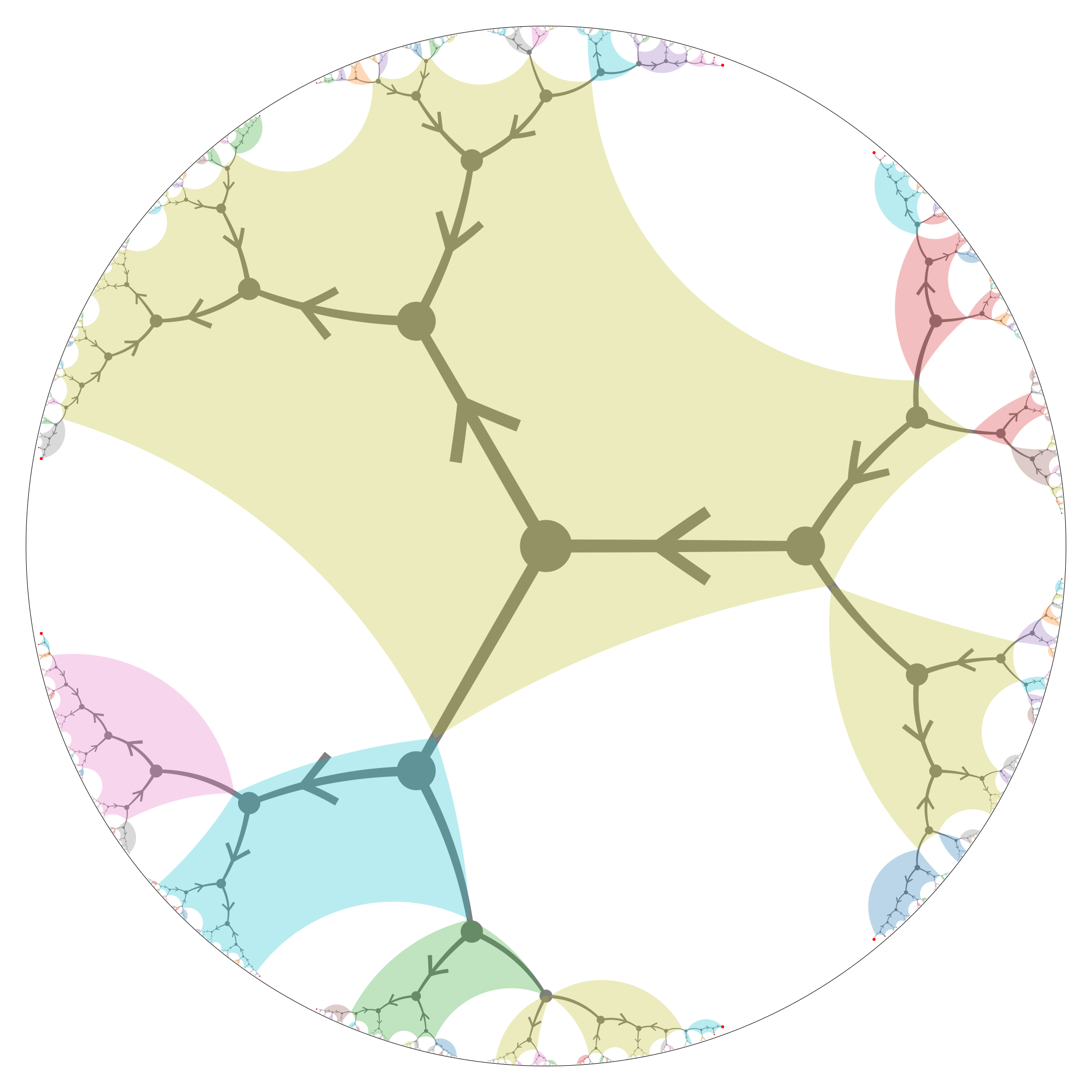
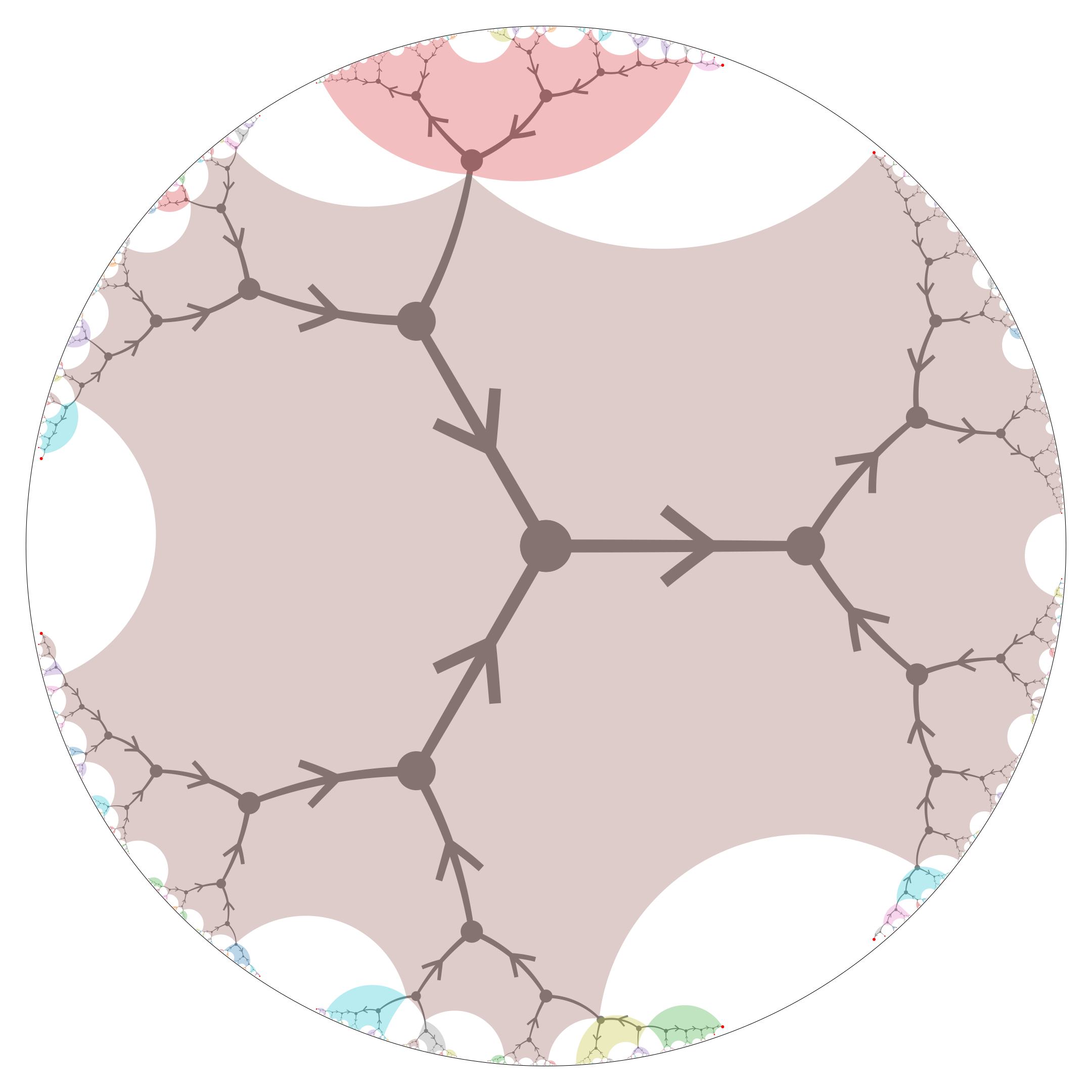
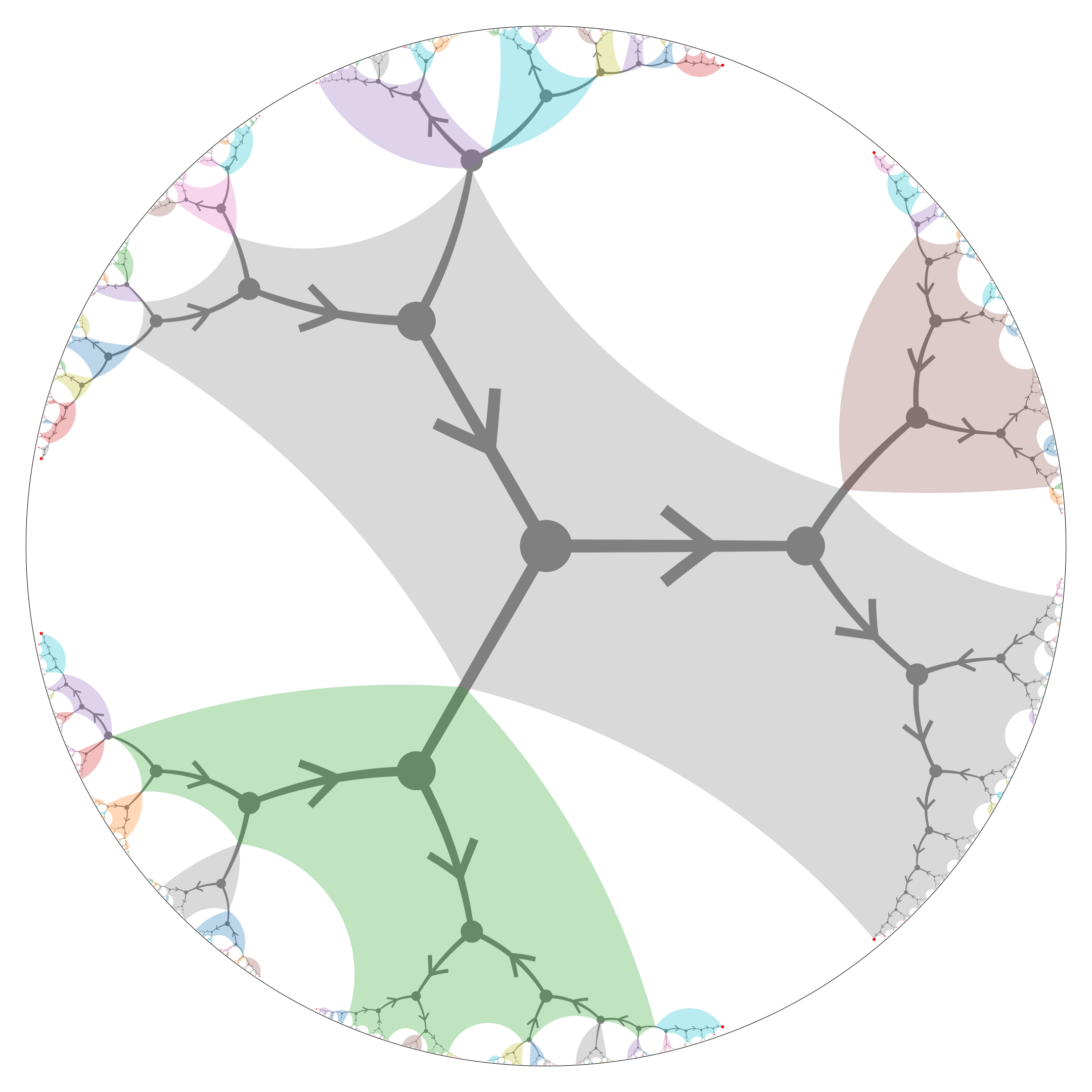
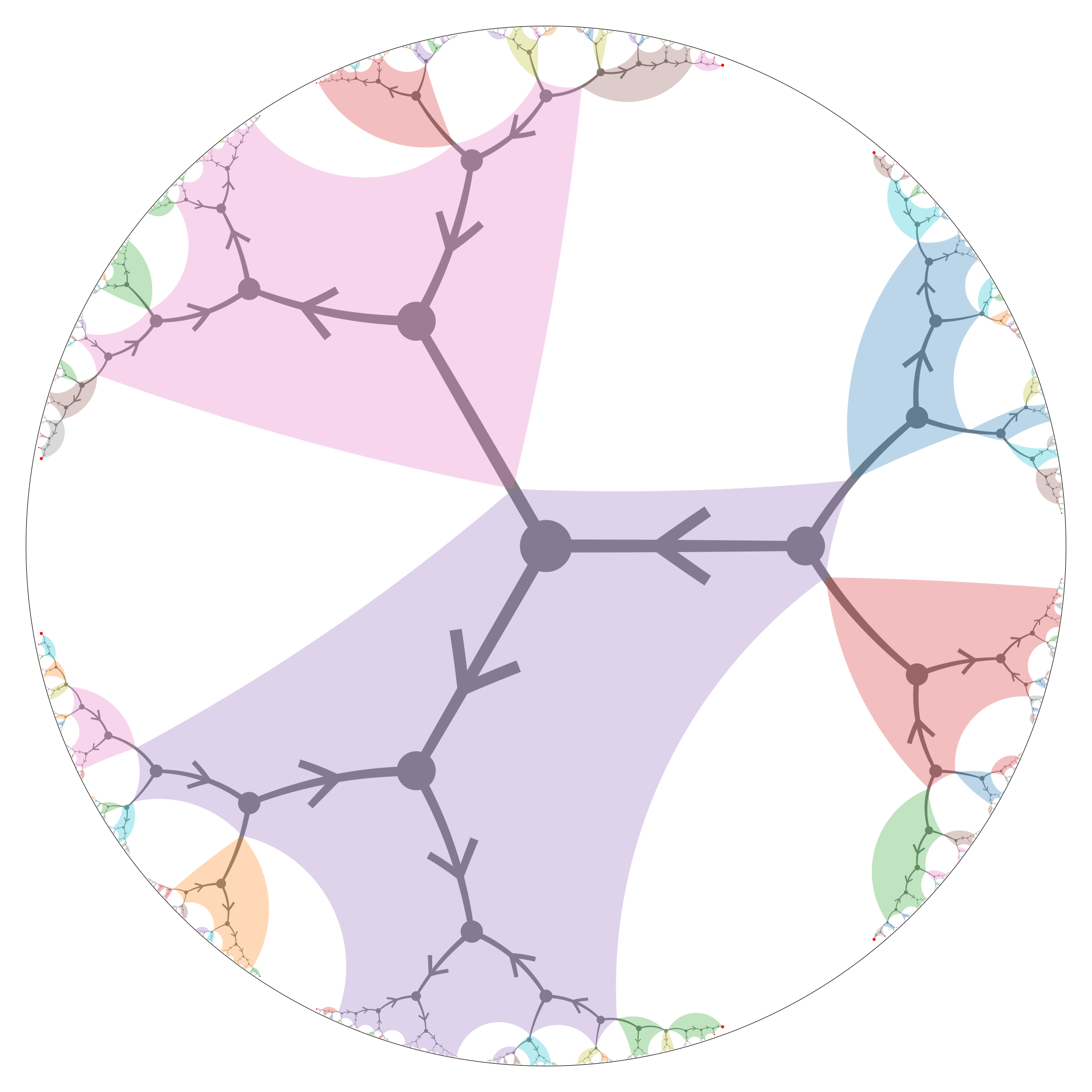
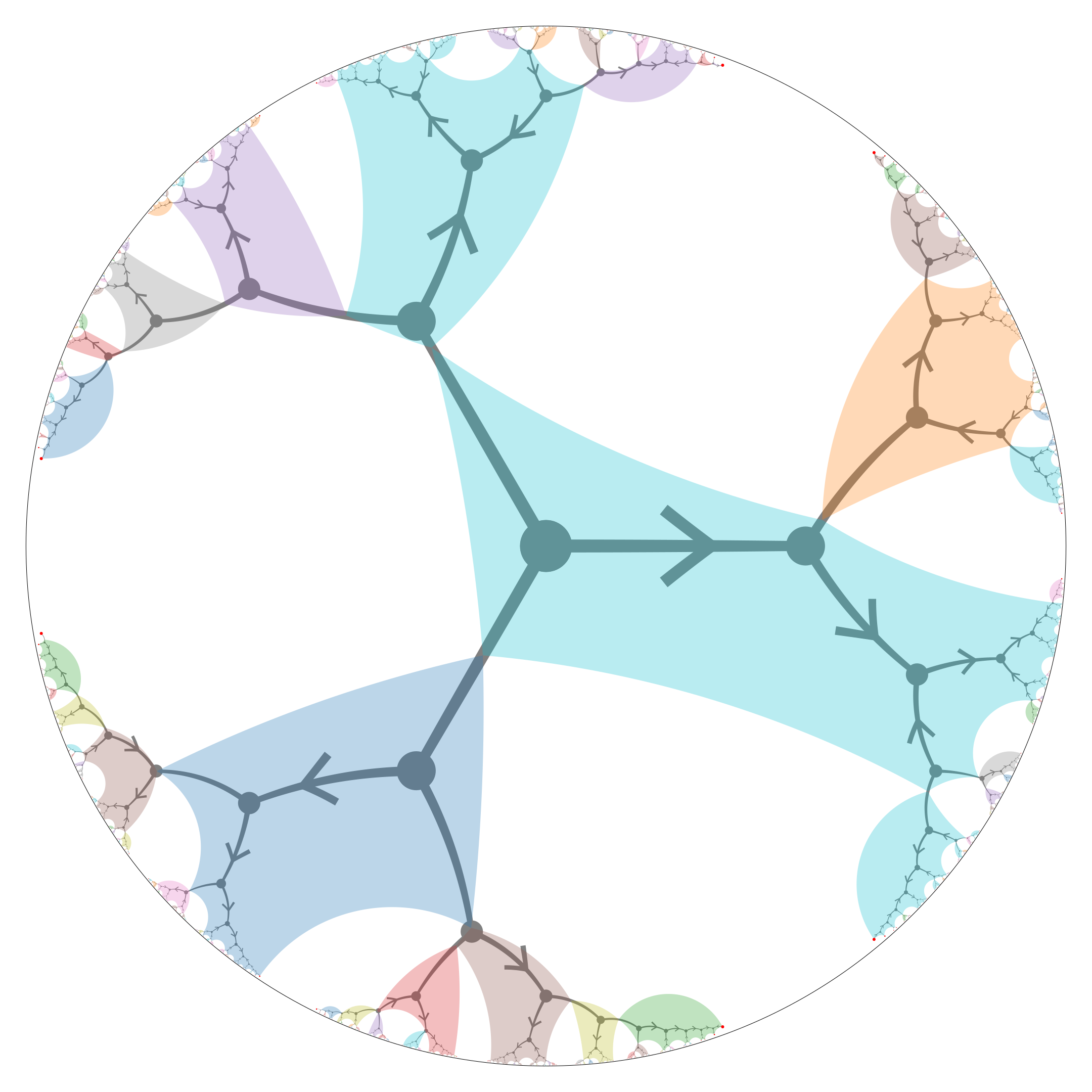
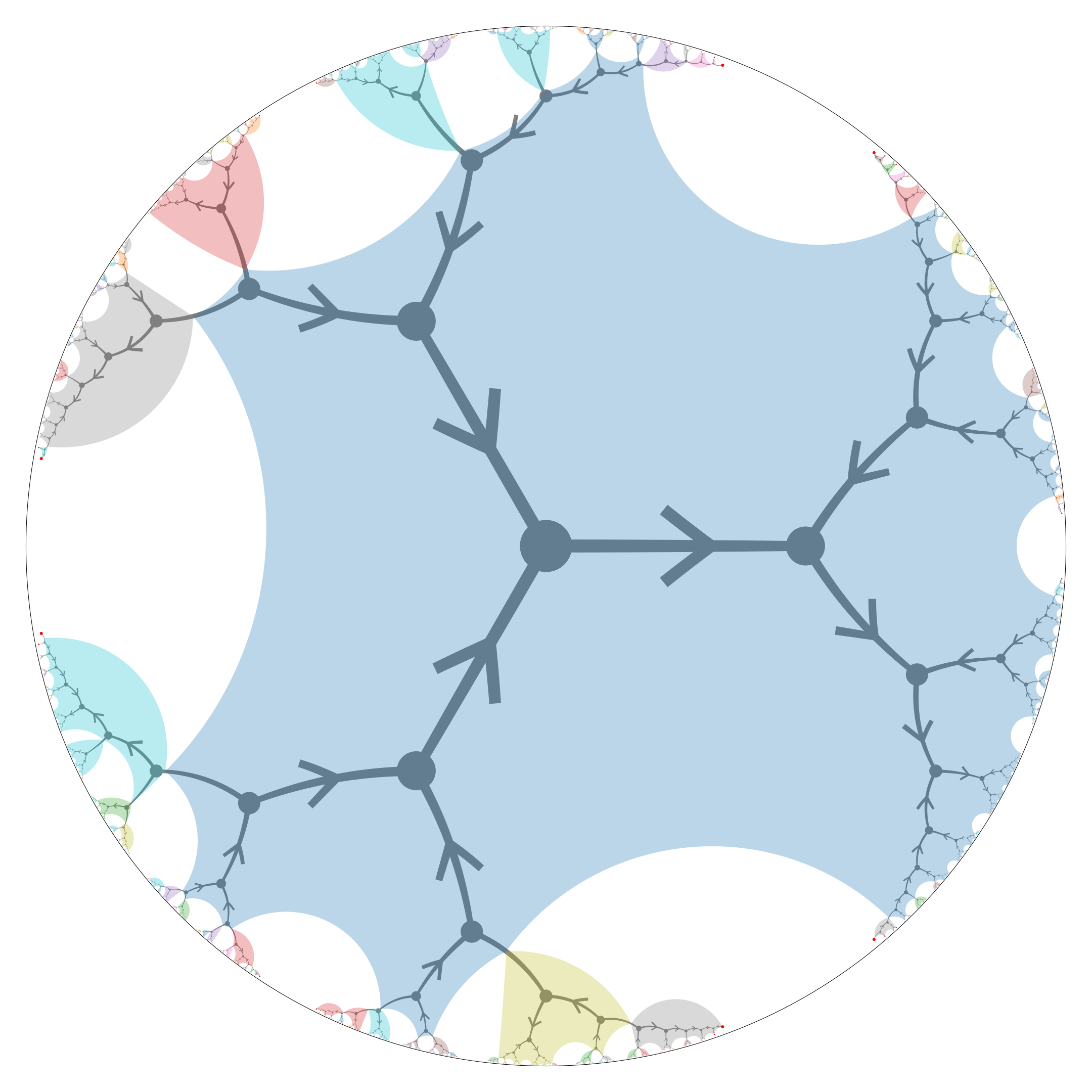
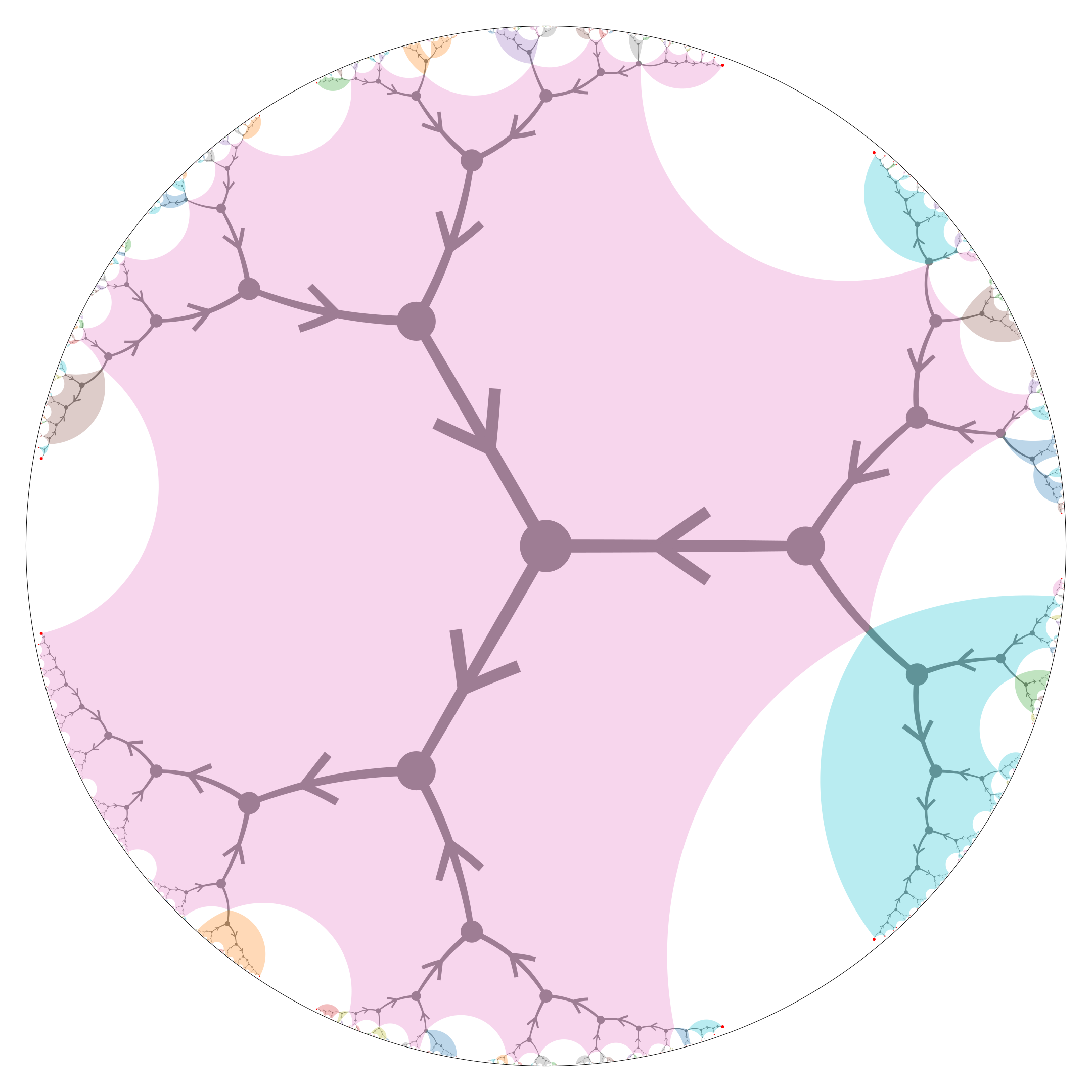
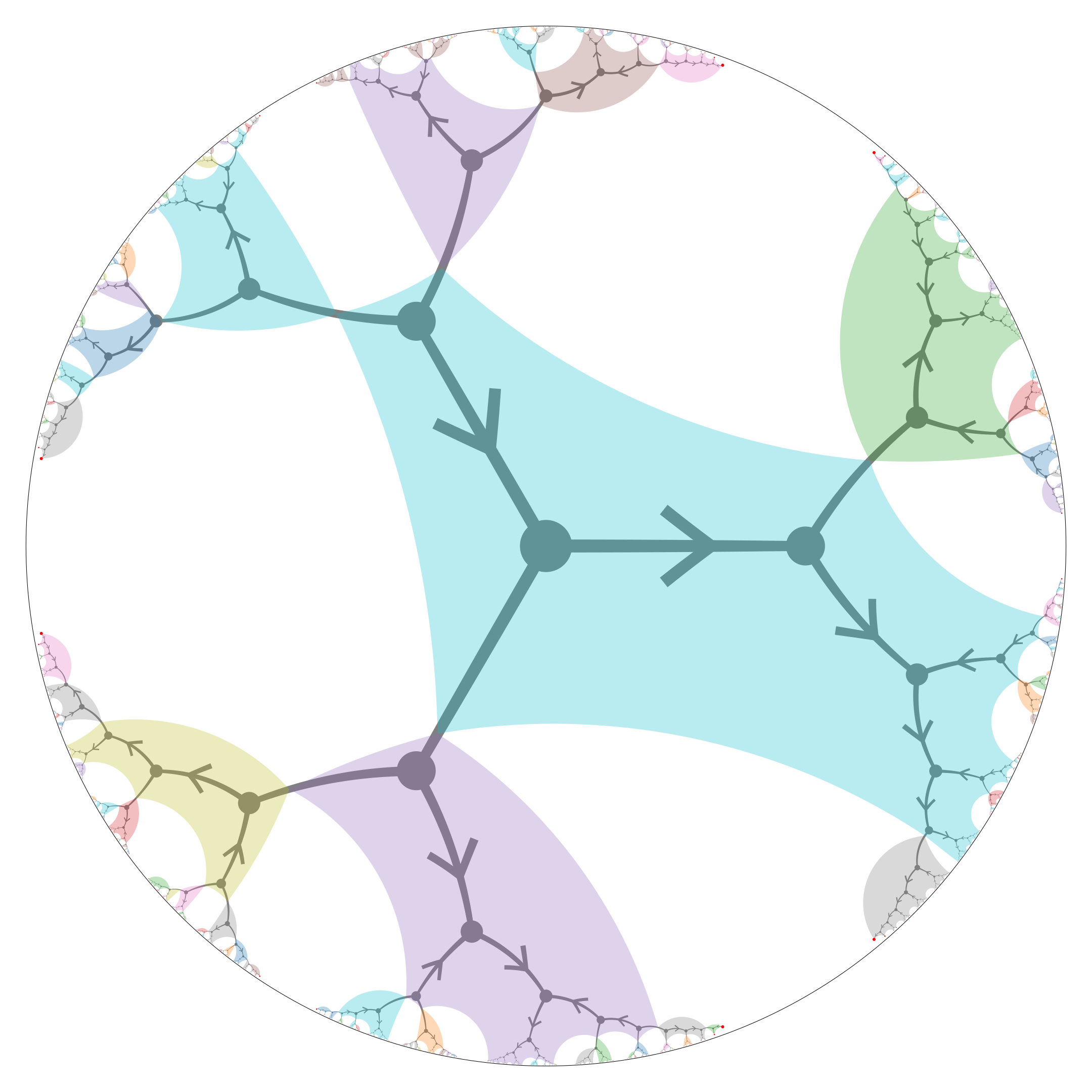
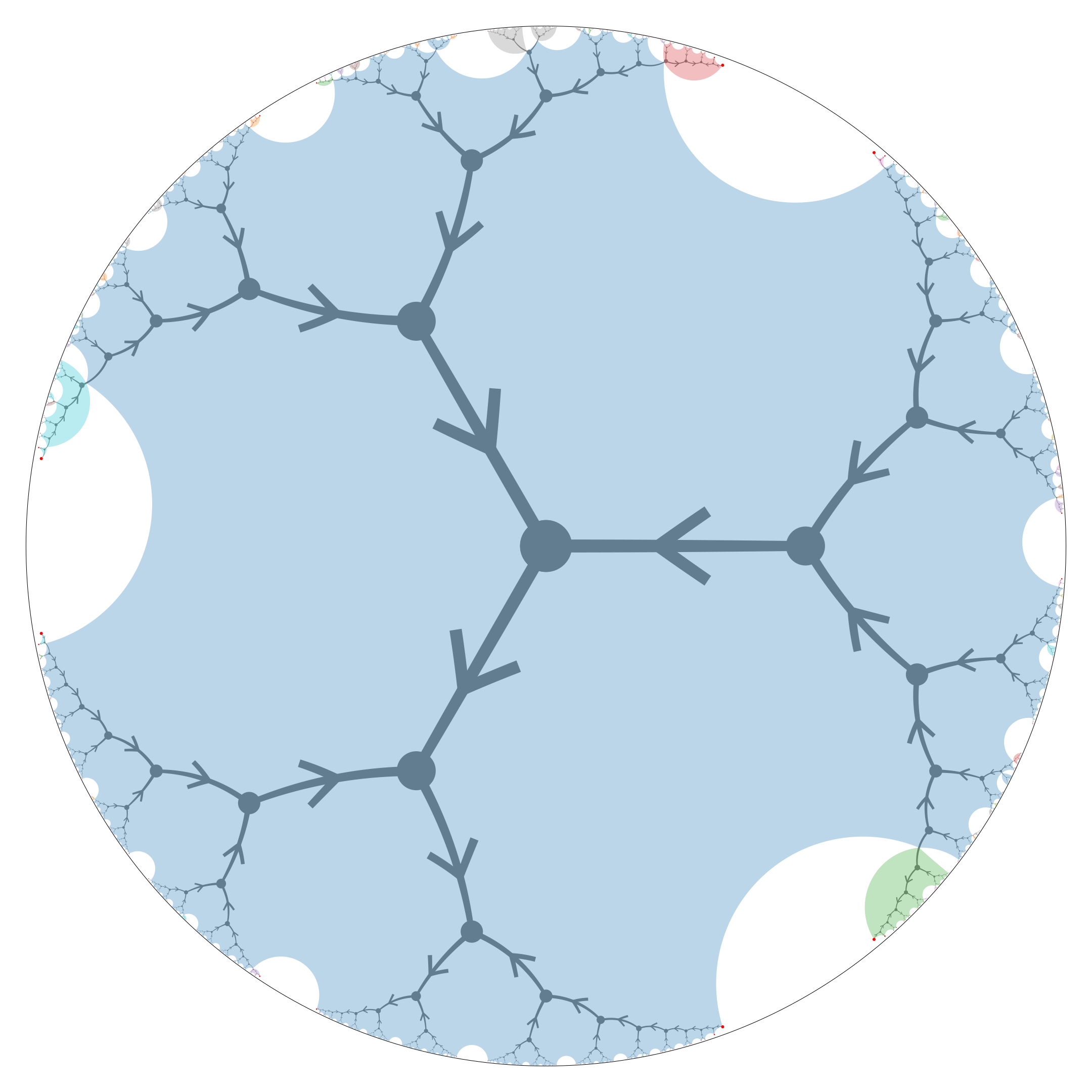
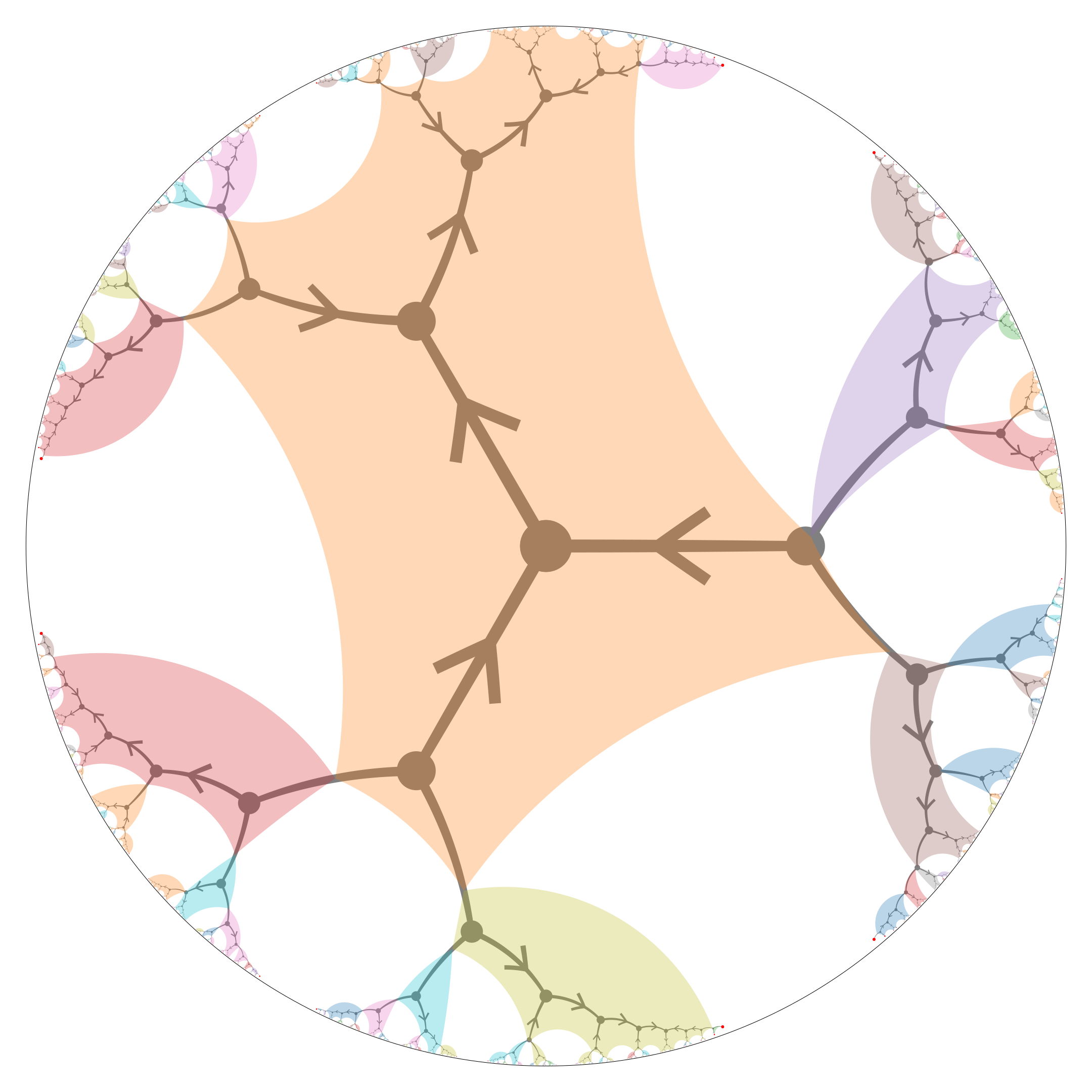
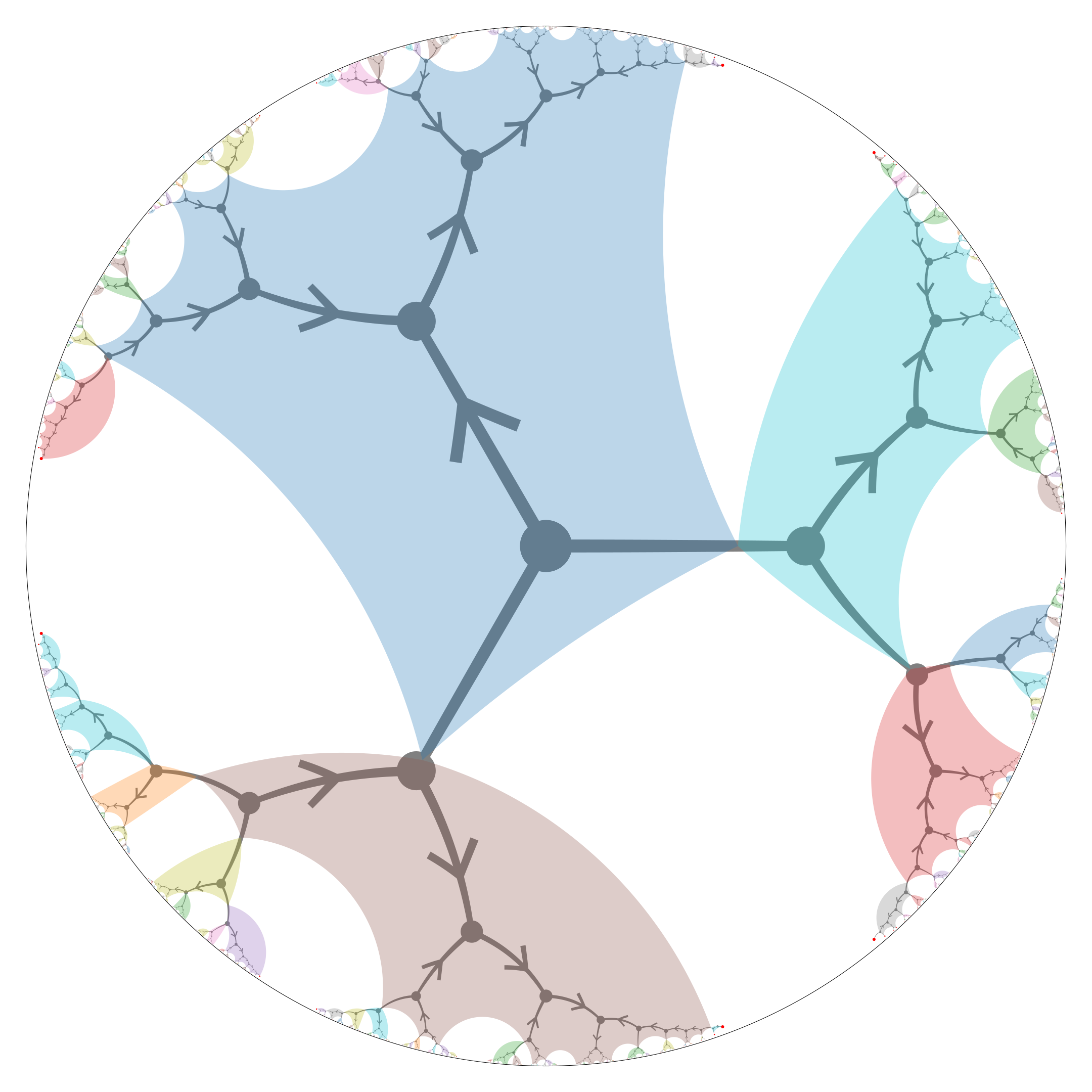
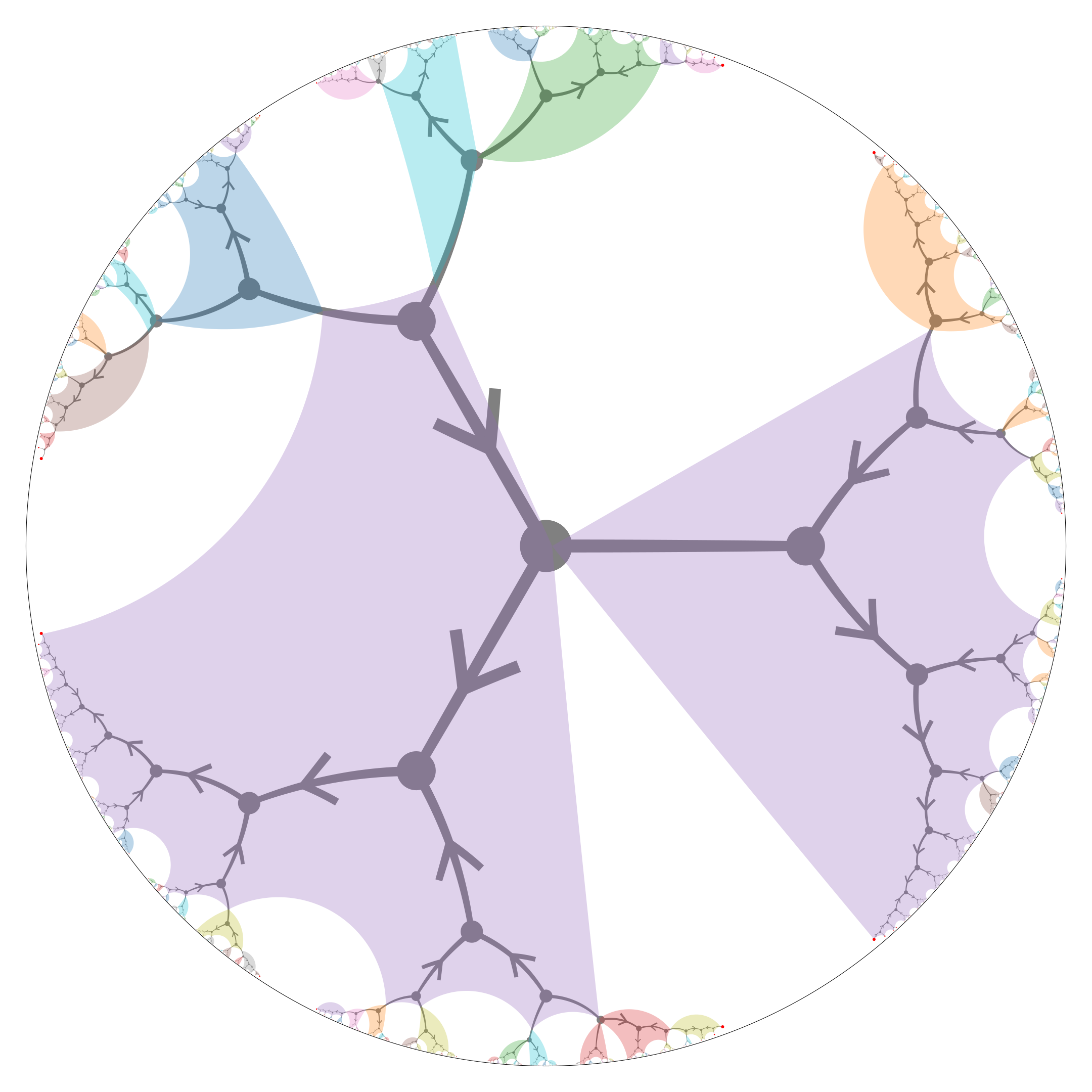
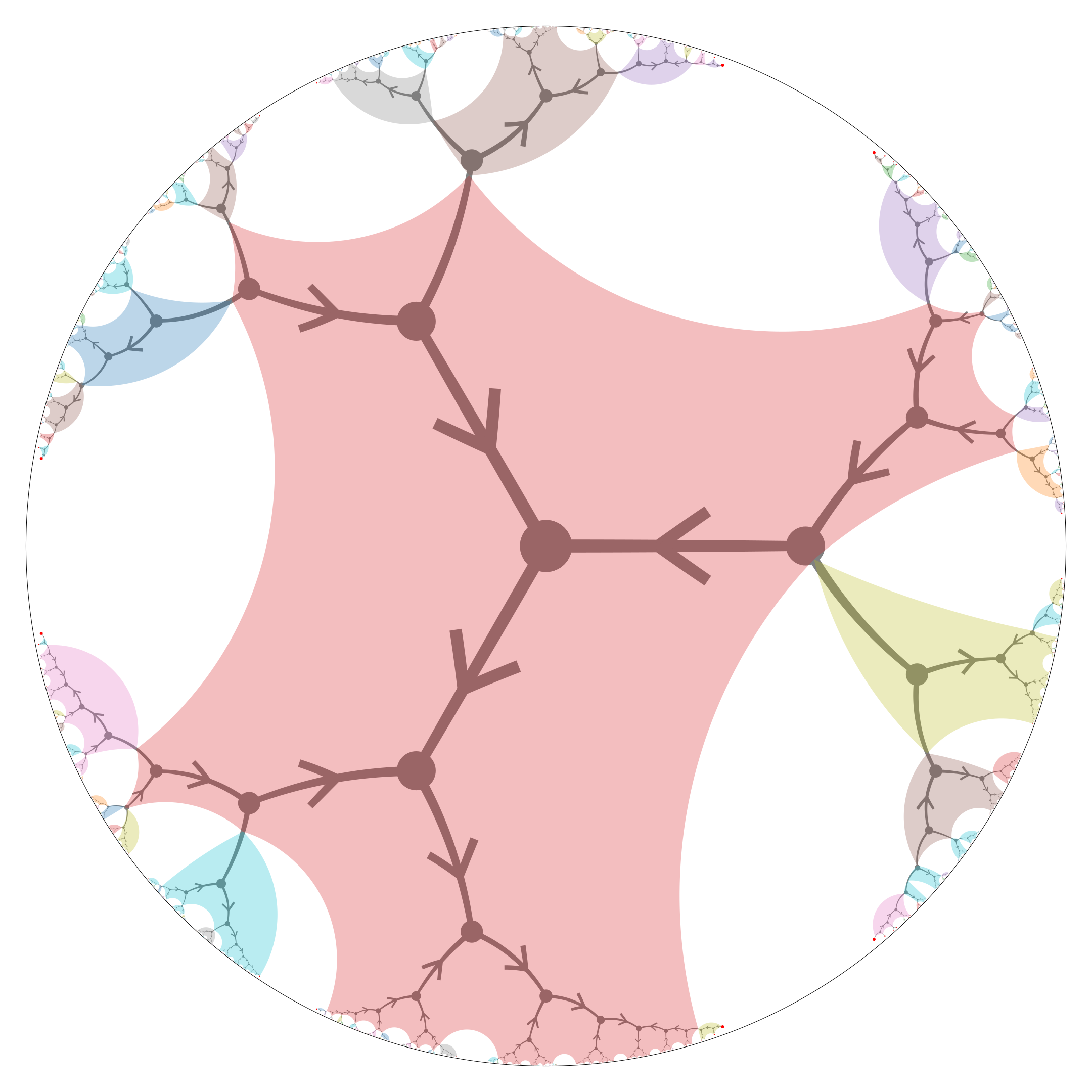
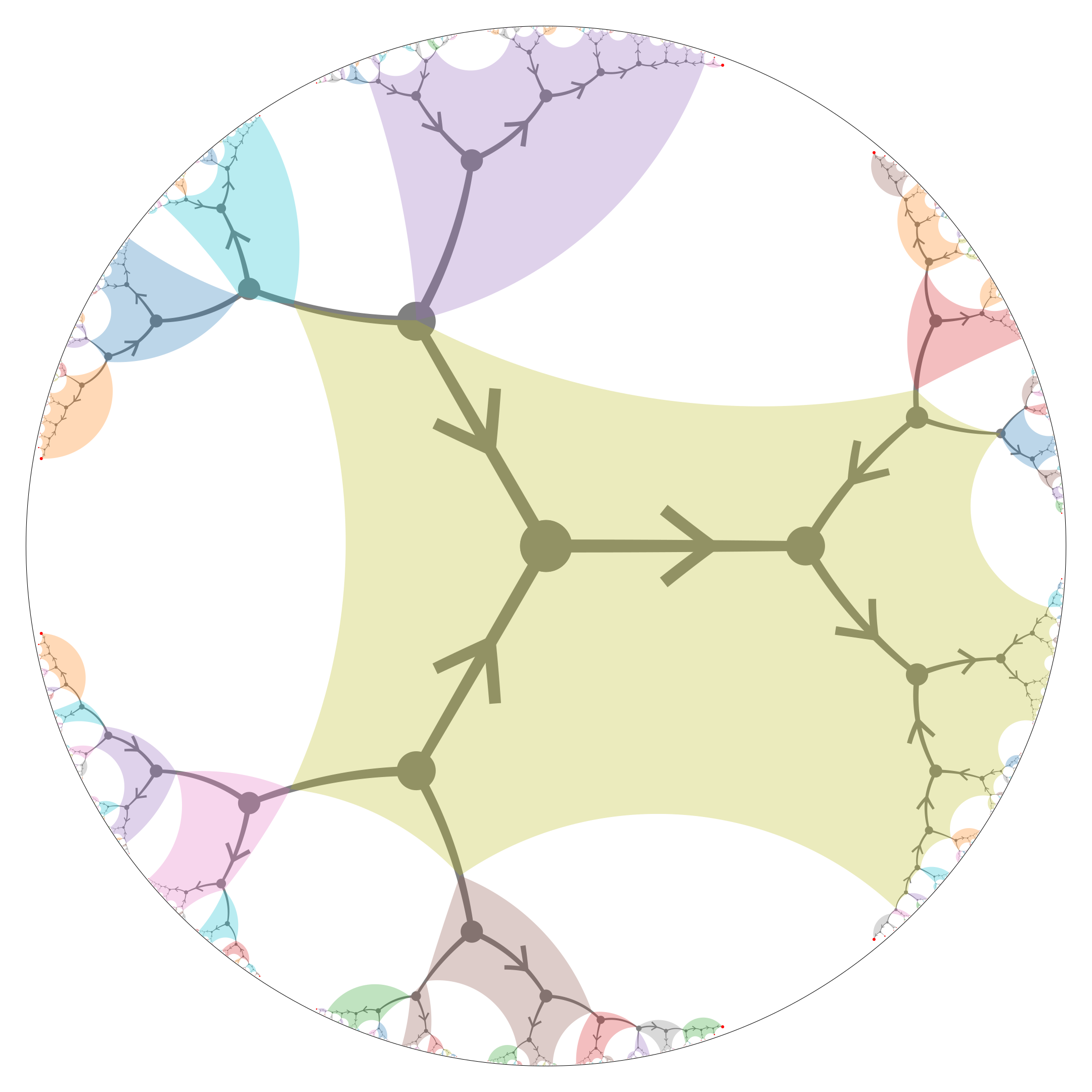
This page contains simulations of the IPVT (ideal Poisson-Voronoi tessellation) of the 3-regular tree from this paper. See Figure 1 of the paper.
If you encounter scrolling issues, click anywhere outside the videos.
The tree is embedded in the hyperbolic plane in a symmetric manner and is depicted in the Poincare disk model. More precisely, the hyperbolic isometries can map every directed edge to every other directed edge. At the beginning, the red points show a Poisson point process with intensity 1. The vertices and the points of the Poisson point process are depicted by hyperbolic disks with constant radii. The Voronoi cells are depicted by hyperbolic polygons.
The points move away from the origin such that, if $x(t)$ denotes the graph-distance of a point to the origin, and $F(r)$ is the volume of the $r$-ball in the tree, then $F(x(t)) = 2^t F(x(0))$. When a point reaches a vertex, it chooses one of the two directions randomly to continue. This implies that, at time $t$, the points form a Poisson point process on the edges with intensity $2^{-t}$.
In the limit $t\to\infty$, the behavior of the animation converges to a 1-periodic continuous loop (see Theorems 1.4 and 1.5 of the paper). Also, the restriction of the cells to the vertices and the midpoints of the edges becomes stable in the limit (see Theorem 1.5).
The next videos start with a higher intensity. Also, the arrows on the edges are directed towards the centers of the cells.
The following is a gallery of independent instances of the IPVT (with parameter $\xi=0$). Click to zoom.